

PLUR1BUS Explained (part 1)
Breakdown of S01E01, "We Is Us"

Hello and welcome to part one of a nine-part series examining the brand new Apple TV show Plur1bus. Plur1bus is from showrunner Vince Gilligan, most famous for bringing us Breaking Bad1 and Better Call Saul. He also wrote 30 episodes on the original run of The X-Files (1995-2002).
I think the tagline of the show is, “The most miserable person on Earth must save the world from happiness.” Just the tagline alone gives us some great unanswerable questions: what makes someone miserable? What is happiness? Our protagonist, Carol, played by BCS alum Rhea Seehorn, really does seem like the most miserable person on earth.
Before we get too far, I should state it plainly: Plur1bus is outstanding, and you should watch it. I wish that you might watch it. It lives on the same shelf as WandaVision, and Severance, perhaps also The Last of Us, and maybe The Leftovers.2 As of this post, there are two episodes available on Apple TV, and subsequent episodes stream on Fridays. Go catch up and come back here. I will offer a detailed breakdown of each episode Monday or Tuesday after the episode premiers. As with our Severance, I’ll try to keep post titles spoiler-free, along with the first few paragraphs of the main text.
Spoilers from here on out!
Before we get into the episode breakdown, we have to talk a little bit about Carol, our protagonist. Carol is a writer, a fiction writer, a novelist, and a pretty goddamn successful one at that. When we meet her, she is reading from her latest novel at a book launch event at Barnes & Noble. Book launch parties are common enough—we’ve been to dozens—but dang near all of them have been at tiny little indie bookstores in New York City. Only the biggest, and most successful novelists get to have their book launches at Barnes & Noble. Carol, as we find out, hates the books she writes. We’ll get into that later. The point here is that we have to notice the show giving us a novelist as a protagonist. The show is coming to us at a time when we are extremely divided on AI, and one of the most visible aspects of this division is the fact that AI can appear to write as well or better than most humans. Writers and artists are worried that their professions may soon become obsolete. Is that what Plur1bus is about?
Like most writers on TV, we don’t see Carol actually writing. Rather, we see the lifestyle afforded to her for having written a hugely successful novel. This is what most people think being a fiction writer is: going on book tour and basking the glow of adoring fans. Who wouldn’t want to be on book tour! If we’ve met a lot of writers on book tour, then we know that they aren’t traveling as posh as Carol. In a series that sees the 9 billion people of Earth joined together in a collective hive mind, the details of Carol’s book tour are the most unbelievable thing on screen.
Do we ever see writers actually writing? Yes, but not very often. We see Jack Torrance slaving away at the typewriter in The Shining, and we know what happens there. We see James Caan’s character at the typewriter in Misery. We see Ernest Hemingway finishing up a story in a crowded pub in Midnight in Paris, but we don’t see Owen Wilson’s character ever writing. Do we see Charlie Kaufman writing in Adaptation? Do we see Emma Thompson writing in Stranger Than Fiction? Here’s something we know for sure: In nine Superman movies, we see about three minutes of Clark Kent and Lois Lane actually at their keyboards.
Writing just isn’t very exciting on screen. So what’s the point of giving us a character who is a novelist? A person who spends most of their time alone making shit up? There’s something thematic here. We just want to yell at her, “okay, Carol Sturka, write yourself out of this one.”3
On with the breakdown.
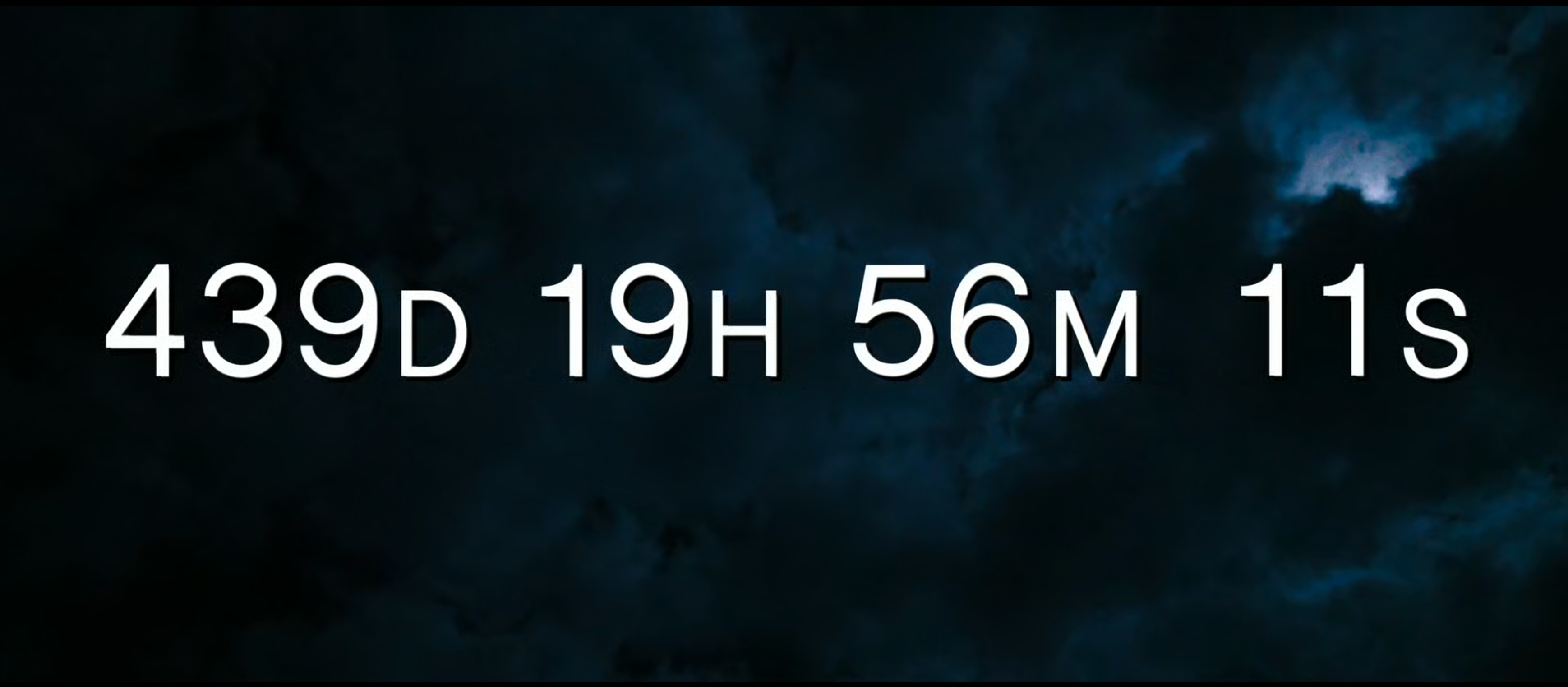
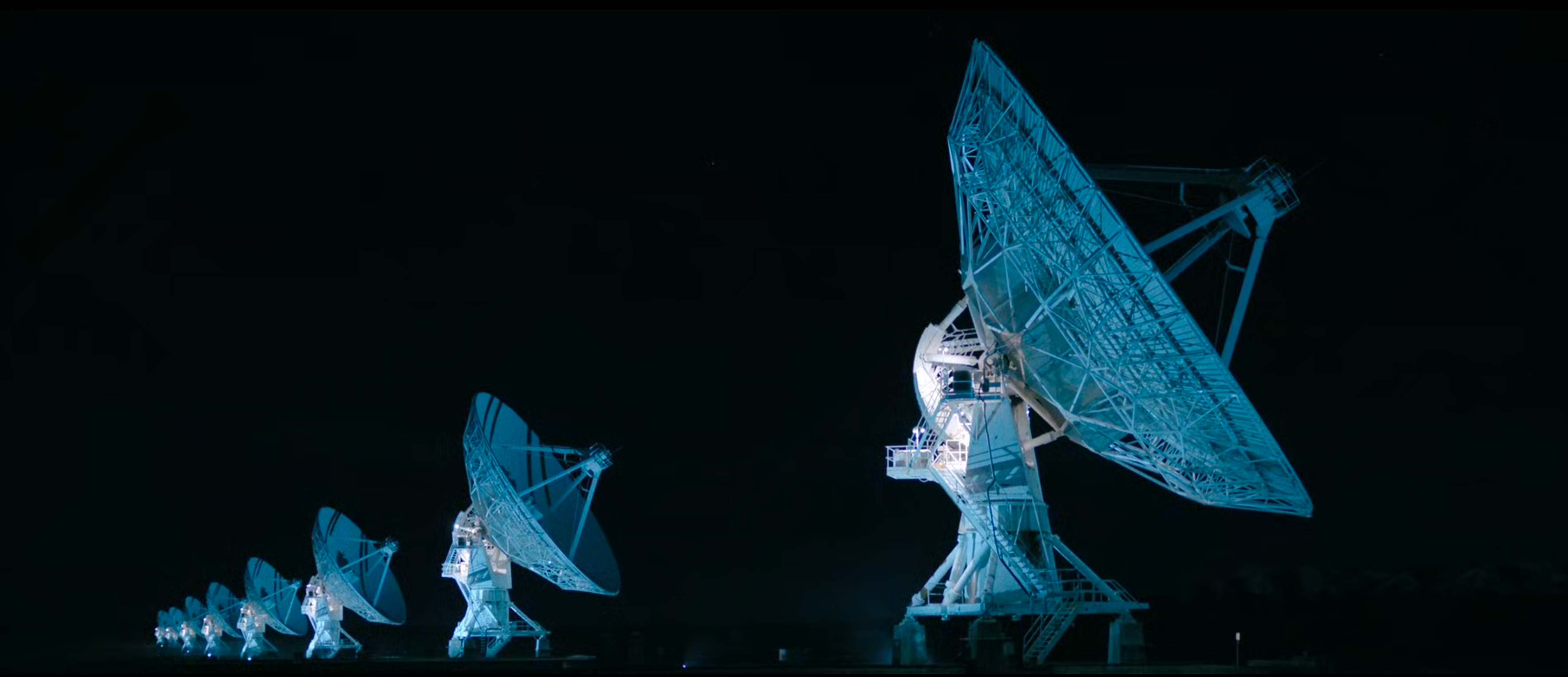
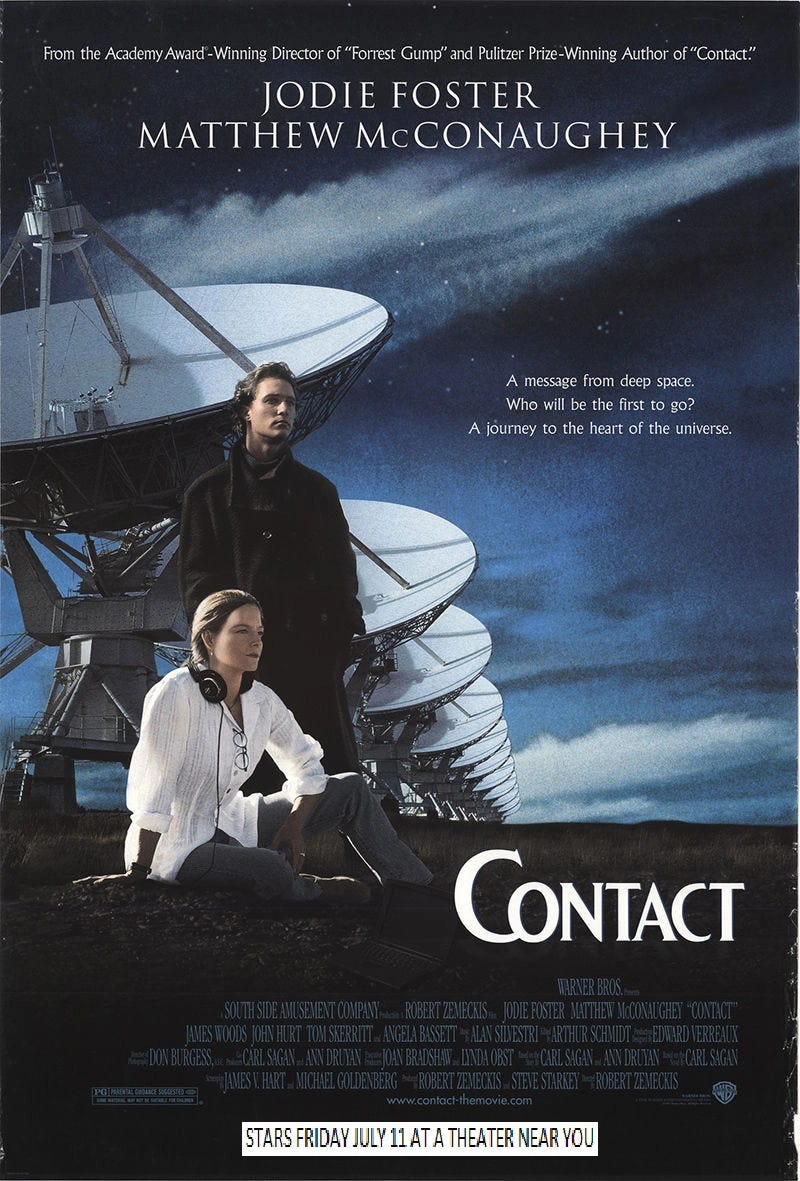
If we’ve seen movies before, we know these satellite dishes. The are the Very Large Array: a radiotelescope made of 28 networked antennas that work in concert to search the skies for signs of extraterrestrial intelligence. Maybe they feature most famously in 1997’s Contact, with Jodie Foster and Matthew McConaughey. What a great movie!
It’s worth taking a moment to break down the first few shots of the show, because they give us something thematic right away. Take a look:
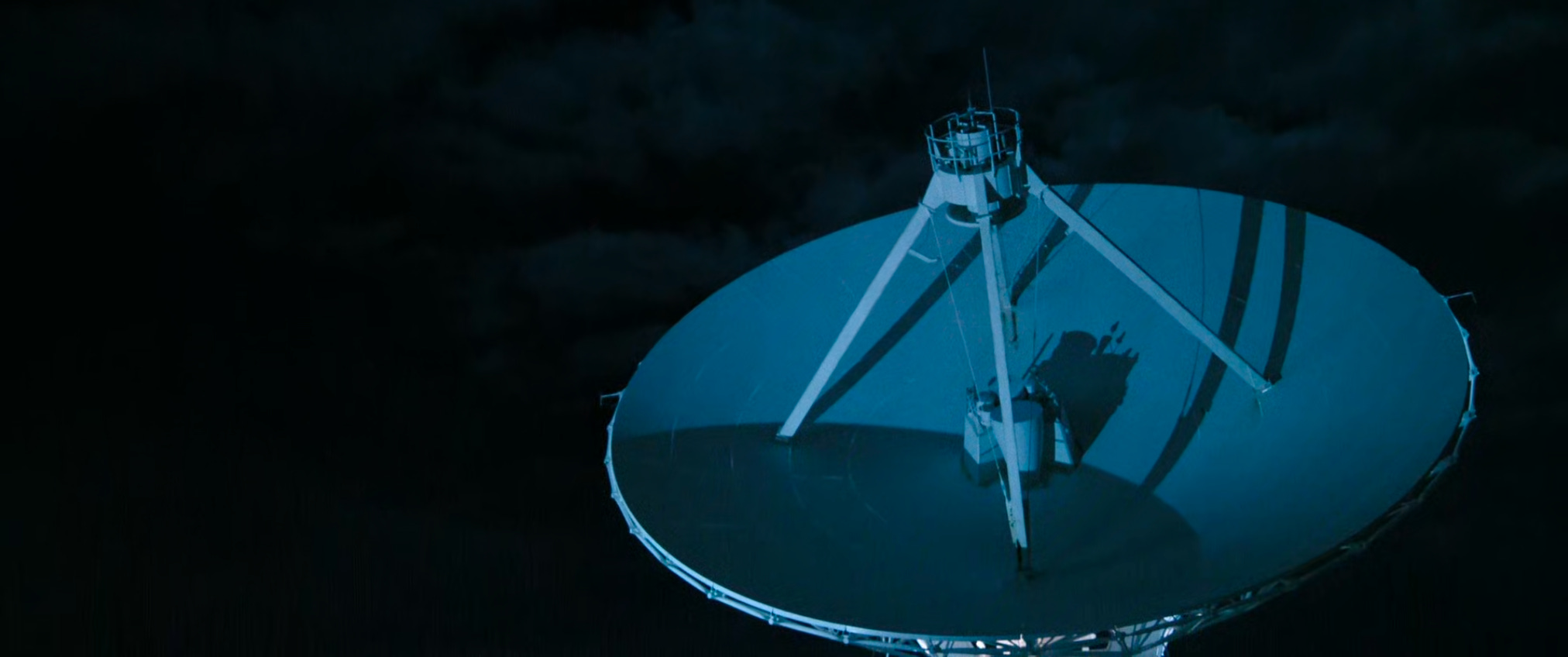
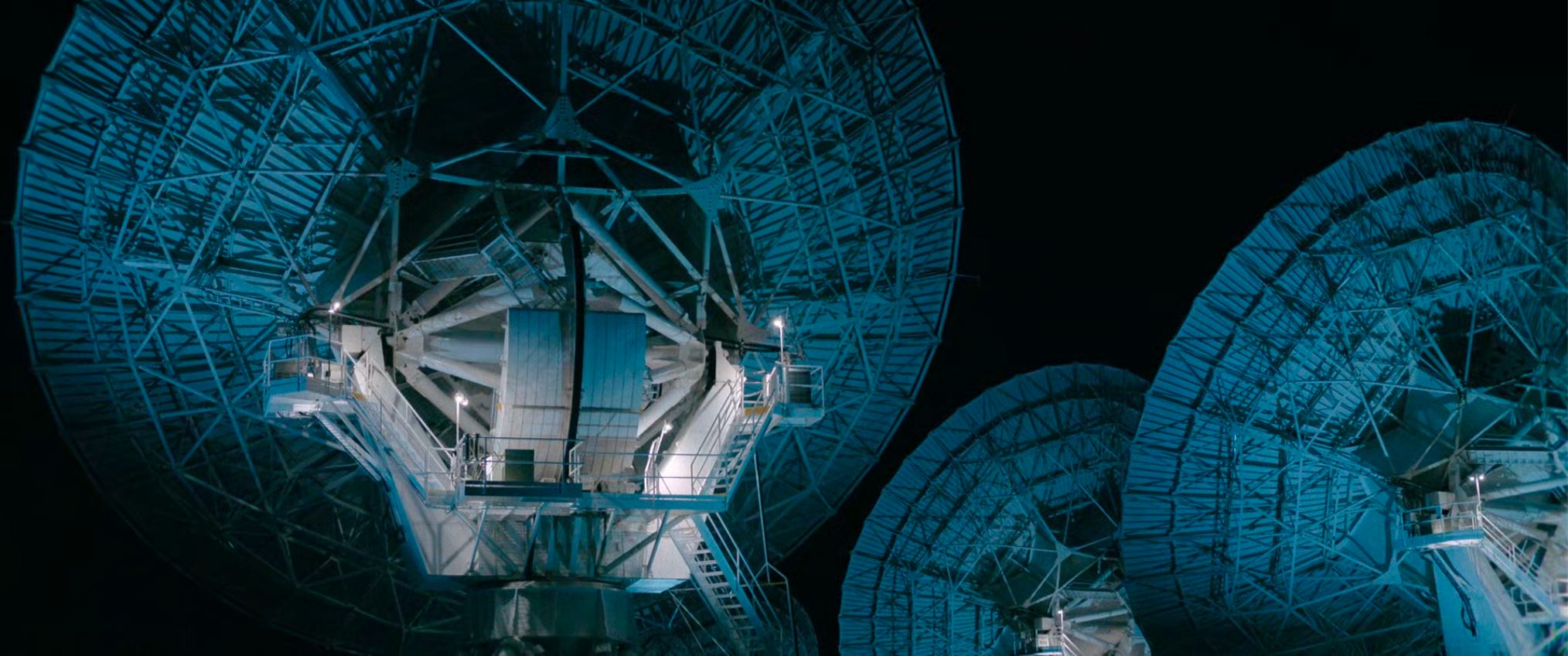
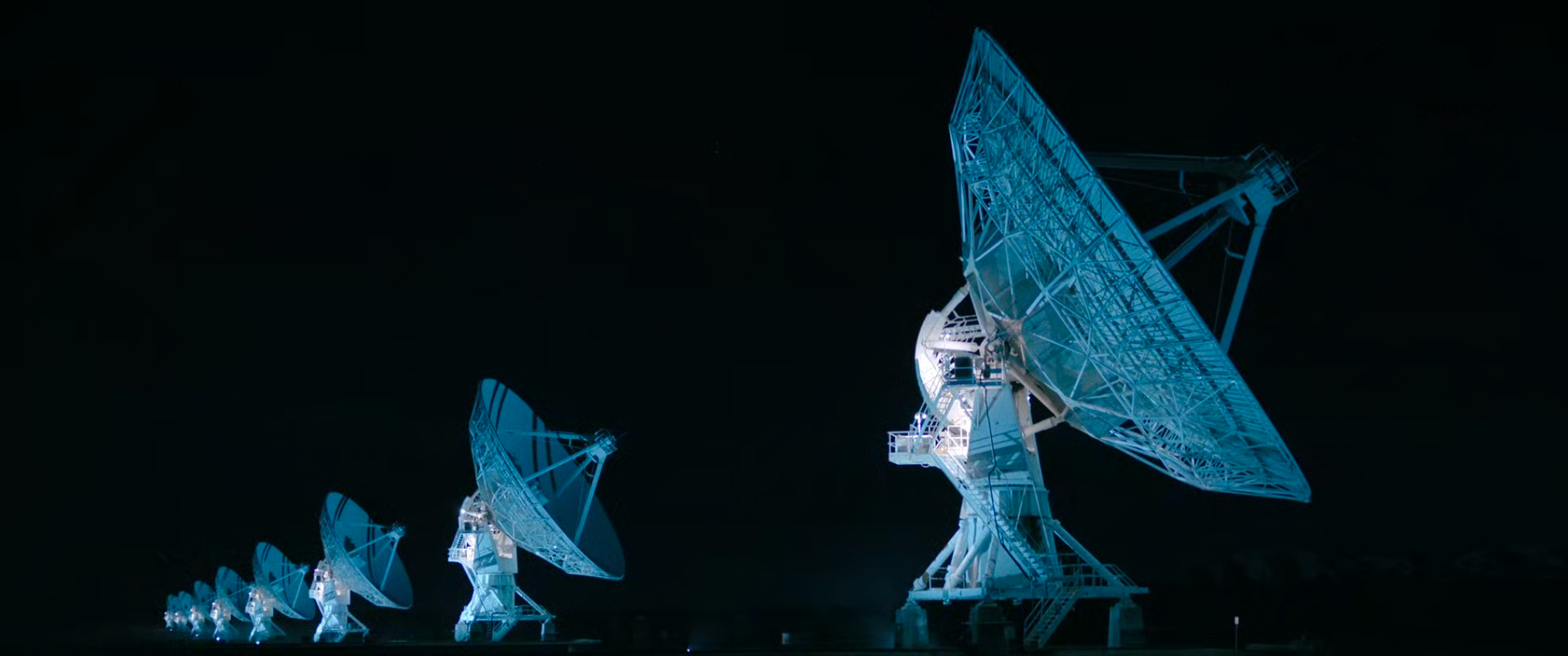
The first shot is a single satellite dish. The second shot is three satellite dishes. Then we see eight dishes. This isn’t merely beautiful photography that establishes location4; it’s a symbolic representation what’s about to happen: humans become linked together in a hive mind, first one, then a few, then several... These satellite dishes are linked together for a common purpose, just as humans will be in a few short minutes. The very first sequence of shots gives us a thematic overture for the entire series.5
The Very Large Array has intercepted an extra terrestrial signal that repeats every 78 seconds. What’s significant about the number 78? An old record? Glad it isn’t 67.
In speculating about what the signal could be, one scientist wonders if it could be “chatty Cathys at the forest service talking about trees,” And suddenly we’re wondering about the novel The Overstory by Richard Powers, which is, among other things, about the idea that a forest shouldn’t be seen as individual trees but as network of nodes, much like a brain.
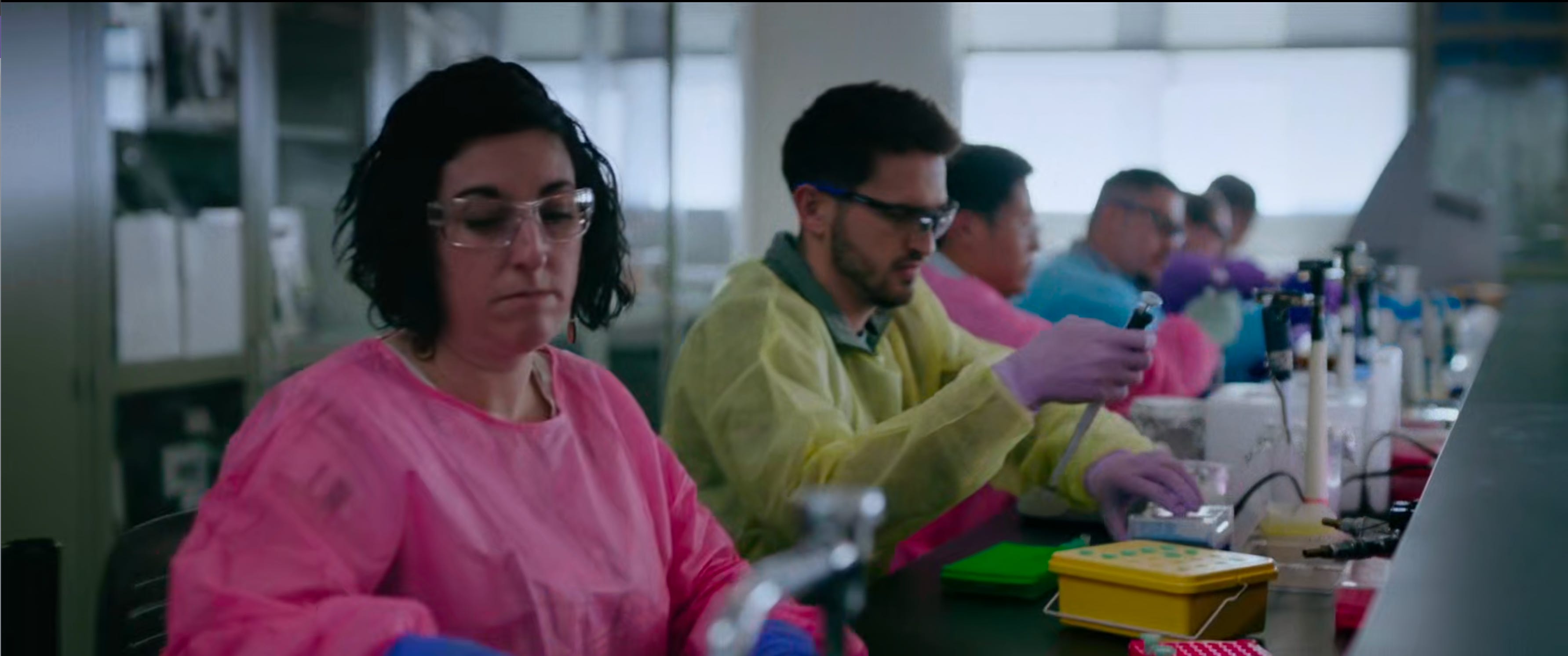
Notice this shot of chemists in the lab. Look at these colors:
At a Barnes and Noble, somewhere near Dallas, Carol reads from her novel. Is this foreshadowing? Here’s the passage she reads:
The twin moons hung low and full. Two wine-green eyes peering over the horizon as if to steal a glimpse into Lucasia’s soul. She paced the blood-soaked decks of the Mercator looking for something, anything, that might take her mind off Raban. Ascending the forecastle, her gaze lingered over a bare-chested young sailor. On hands and knees, he scrubbed, his sinewy forearms stretched taut as he washed away all trace of the day’s fight. With a languid nod, Lucasia bade him follow to her cabin. Little did this callow deckhand know that serving at his captain’s pleasure might take on such sweet meaning, or, regrettably, that it would last but a single night. Later, at four bells, Lucasia stood by the mizzenmast. Once again, she was alone. She pulled her topcoat tighter, fingering its coarse wool, as her thoughts flashed back to Raban. It had been he who first wrapped the coat around her, whispering in her ear, “May this keep you warm in my absence, ma chérie.” With that, Raban proud, haughty Raban, mounted the plank and leaped from sight. The amaranthine slipsand closed over him, leaving nary a ripple.
Someone wrote this. Yes, sure, Carol wrote it. But Vince Gilligan also wrote this. Anytime we hear a passage from a book in a movie, it’s thematically relevant, or at least it should be. Maybe we don’t yet know enough about the story to know how this passage is thematically relevant, we can tuck it away for later.
(And but before we leave it, just what the hell is “amaranthine slipsand?” And how does a ship sail through sand? Is there anyone else out there who wants to see this rendered on screen?)
Here’s a blink-and-you’ll-miss-it moment. Bit of dialogue that comes over the PA at Barnes and Noble. “Attention lovers of speculative historical romance literature (is that a real genre? Speculative historical romance?) Best-selling author Carol Sturka will now sign her new novel, Blood Song of Wycaro, the fourth book in her Winds of Wycaro trilogy.” First, the dialogue straight up tells us what we need to know: Carol is a best-selling author. We could have figured this out by the fact that she’s having a reading at Barnes and Noble and not your local indie bookshop, but thank you, show, for making it easy. More importantly, her new book is the fourth in a trilogy. The Hitchhiker’s Guide to the Galaxy is, infamously, a trilogy of five-and-a-half books, so there’s probably a subtle nod to some formative sci-fi here. But this also tells us that Carol is out of ideas. She’s got nothing new to say, or rather, nothing she feels she can say.
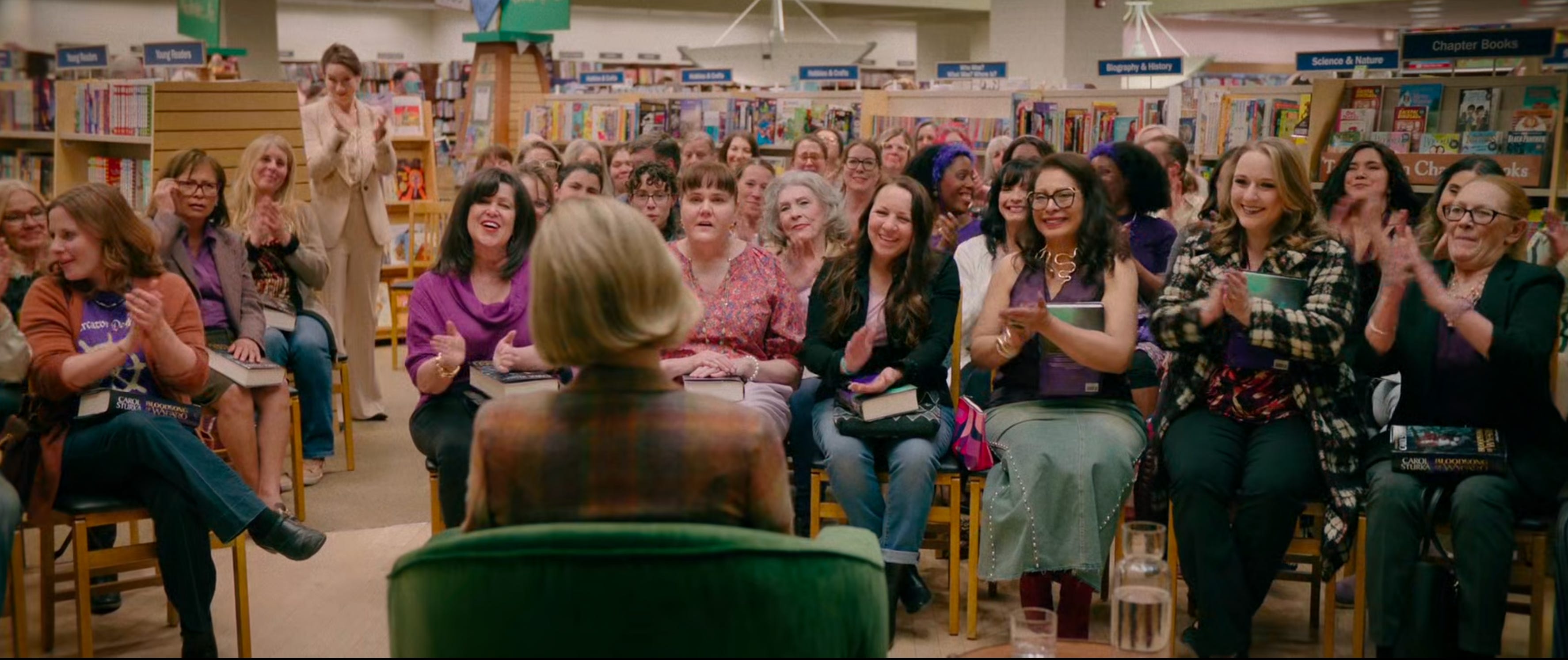
Here’s Carol’s audience:
We learn that the signal is a recipe for a “lysogenic virus,” which, according to Google Gemini, is a virus that “reproduces by integrating its genetic material into the host cell’s DNA, creating a latent infection where the viral DNA is copied along with the host’s DNA during cell division…”
One of the test rats appears dead, but it isn’t, and Jen gets bitten. She convulses, recovers, and… then what? We think we know what happens to people joining the hive mind, but what is Jen’s experience as patient zero?
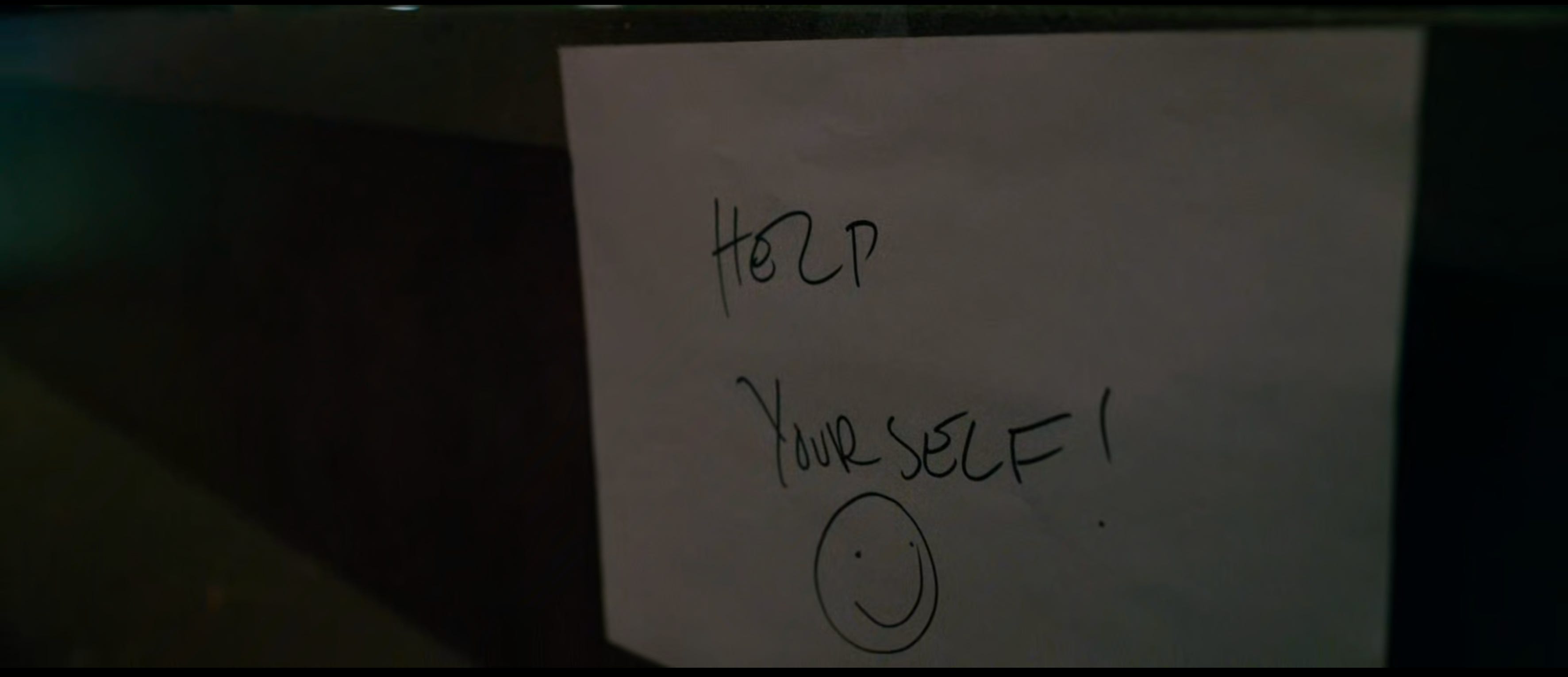
Notice the handmade sign under the doughnut box: HELP YOURSELF. On the surface, the sign refers to the doughnuts. Please take a doughnut, no need to wait or ask for permission. Of course the phrase also means “provide assistance to your own person.” Some thematic underscoring here.
The muzak in the Albequerque airport is “Time of Your Life,” not by Green Day, but by Bill Medley and Jennifer Warnes. Again, this is a deliberate thematic choice.
Carol likes to drink.
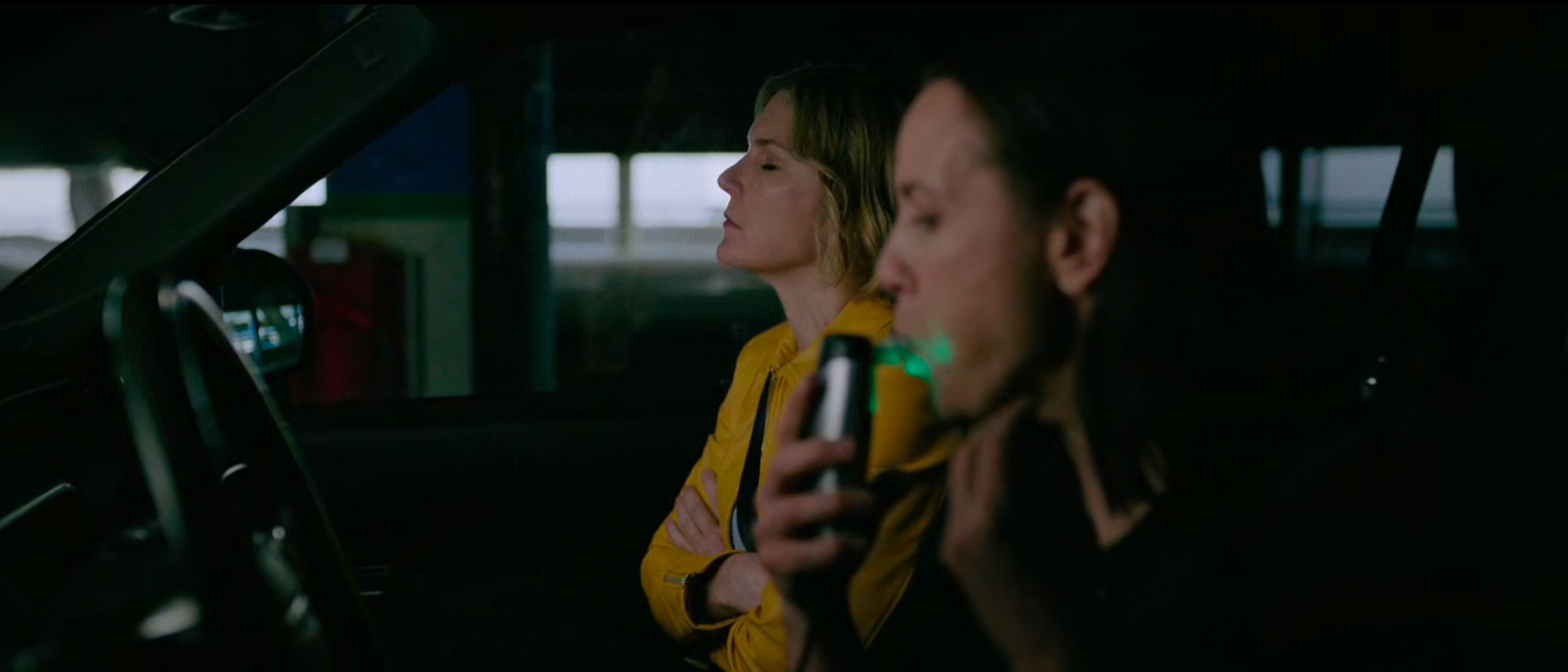
The car breathalyzer is interesting. Does Plur1bus take place in a future where breathalyzers are standard features on cars, or is it just Carol’s car because she got a DWI one time? This lady’s life is miserable.
In the bar, Carol shits on her own book. “Purple sand? A ship that sails on purple sand? The world needed that! And the world needed another moody female character who swoons over a pirate. And the world needed yet another female character who spends all her time mooning over some fucking proud and haughty pirate.”
“Maybe it’s time for your serious book,” Helen says. Is that the big question of episode one? Why hasn’t Carol released her serious book? The title of the serious book is Bitter Chrysalis. Yikes, that is not a good title. But it is heavily loaded with symbolism. What’s worse than a bitter chrysalis? A chrysalis is supposed to transform the caterpillar into a beautiful butterfly. Does that mean that Carol is the caterpillar? What does a bitter chrysalis transform a caterpillar into?
The country cover band starts back up. Knowing what’s coming, we might wonder. What is it like to play music in the hive mind/collective? What about drama? Are there plays in the collective? Everyone knows every part. But also, everyone in the audience knows exactly what’s going to happen.
Carol (a fiction writer, don’t forget) answers some fan questions posted on social media. One fan wants to know if her character Raban was based on a real person. Carol is coy about the answer, offering “George Clooney,” and the show promises to come back to this question. For now, we’ll wonder, did George Clooney survive the first day? Is he part of the collective? Will he make a cameo?
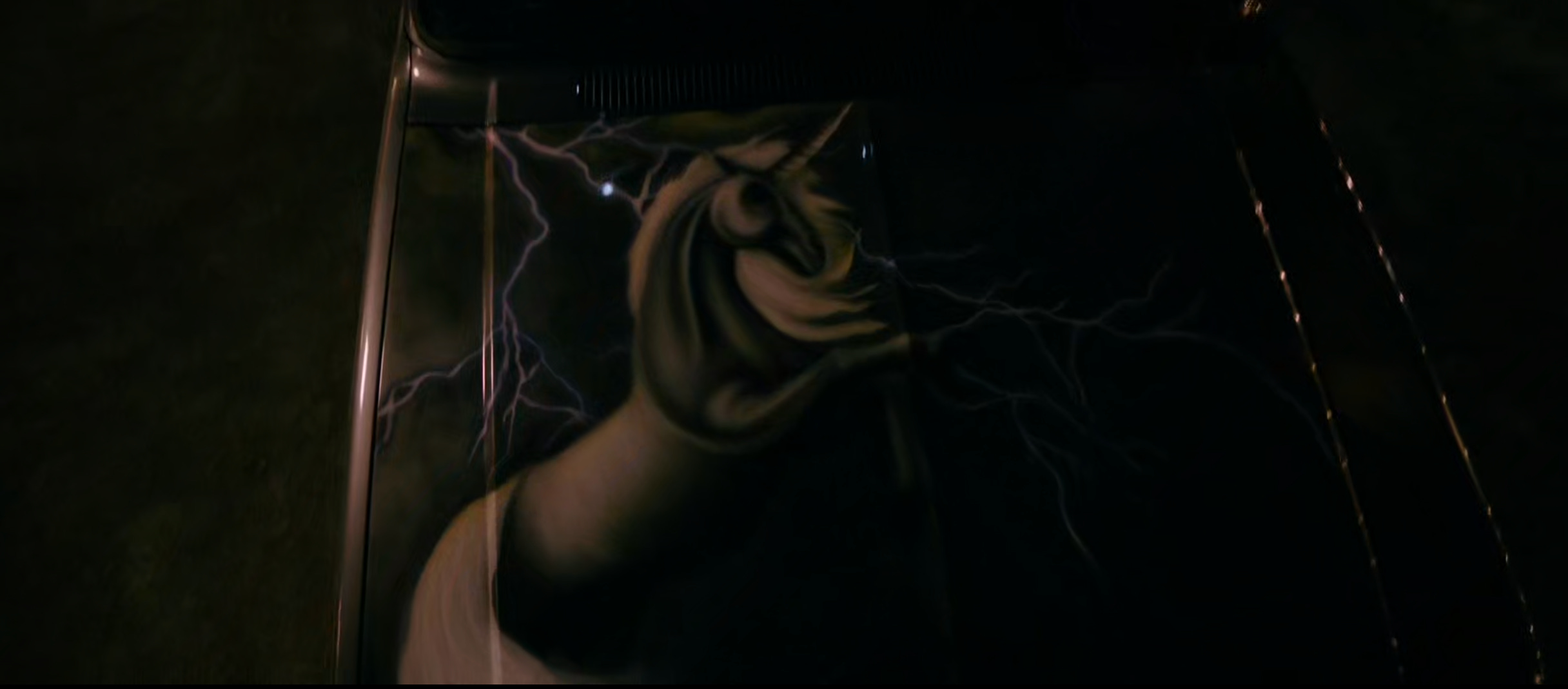
The show goes out of its way to make sure we see Helen drop her pack of Morley cigarettes:
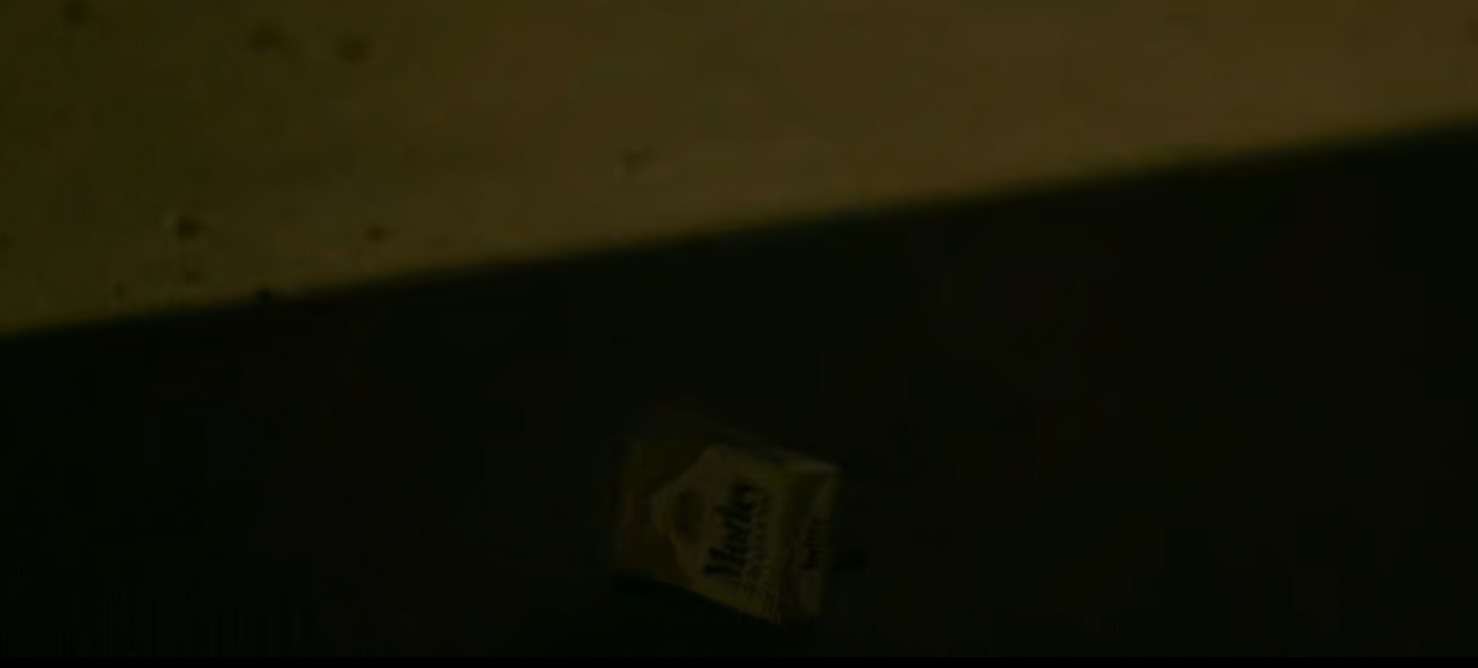
Why? Morley cigarettes aren’t a real brand. That’s definitely what Cancer Man smoked in The X-Files. Is this detail just an Easter egg, or is smoking somehow important?
Here’s Carol at the hospital, trying to wake up a doctor:
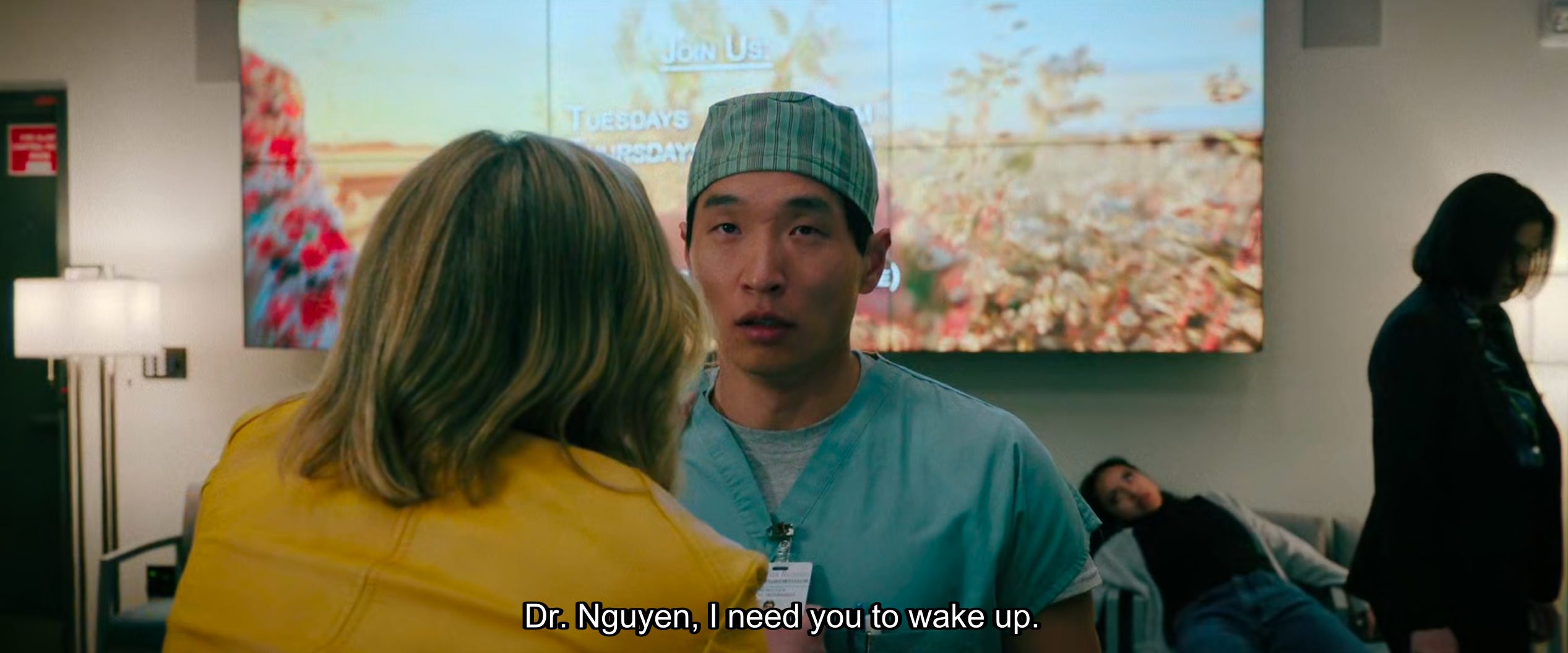
Notice the monitor behind the doctor. We rarely notice these kinds of things in shows, but at some point, we have to remember that someone made this. This is not a real hospital, this is a set. So the graphics on that monitor were designed by the television production team, just like everything else. Notice the words right behind his head: “Join us.” It’s details like this, tiny things that we would never notice, that clue us in to the quality of a production.
Helen wakes up, and then immediately dies. But why does Helen die? Obviously, some people had horrific injuries that destroyed their bodies. But what happened to Helen? Did she sustain a head injury when she fell backwards? What happened to Helen?
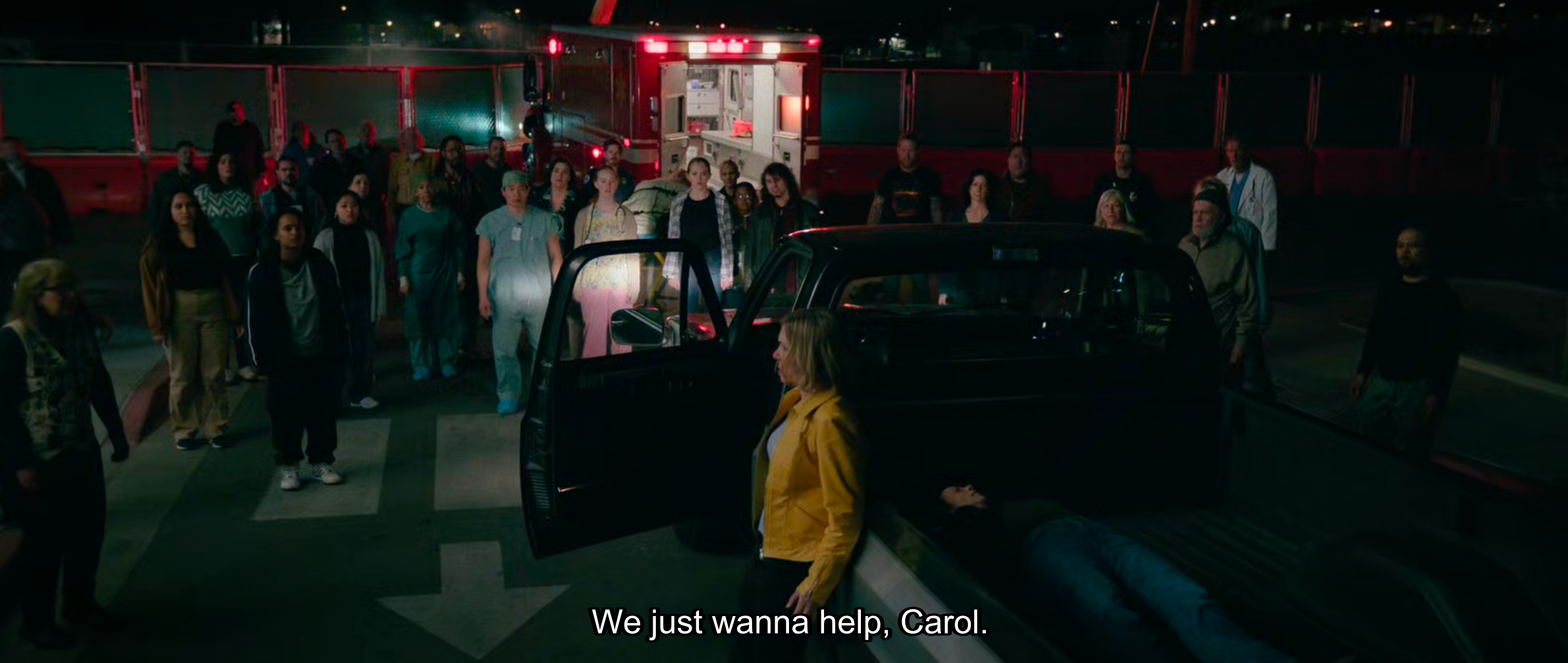
Carol drives home with Helen’s body. A pair of neighbor kids, now a part of the collective, remind Carol that she has a spare key hidden under a flower pot. All of the neighbors leave, and Carol turns on the TV. Most channels are off the air, but C-SPAN is on, and we see the familiar podium in the White House briefing room. Carol is relieved, shouting, “God bless America.”
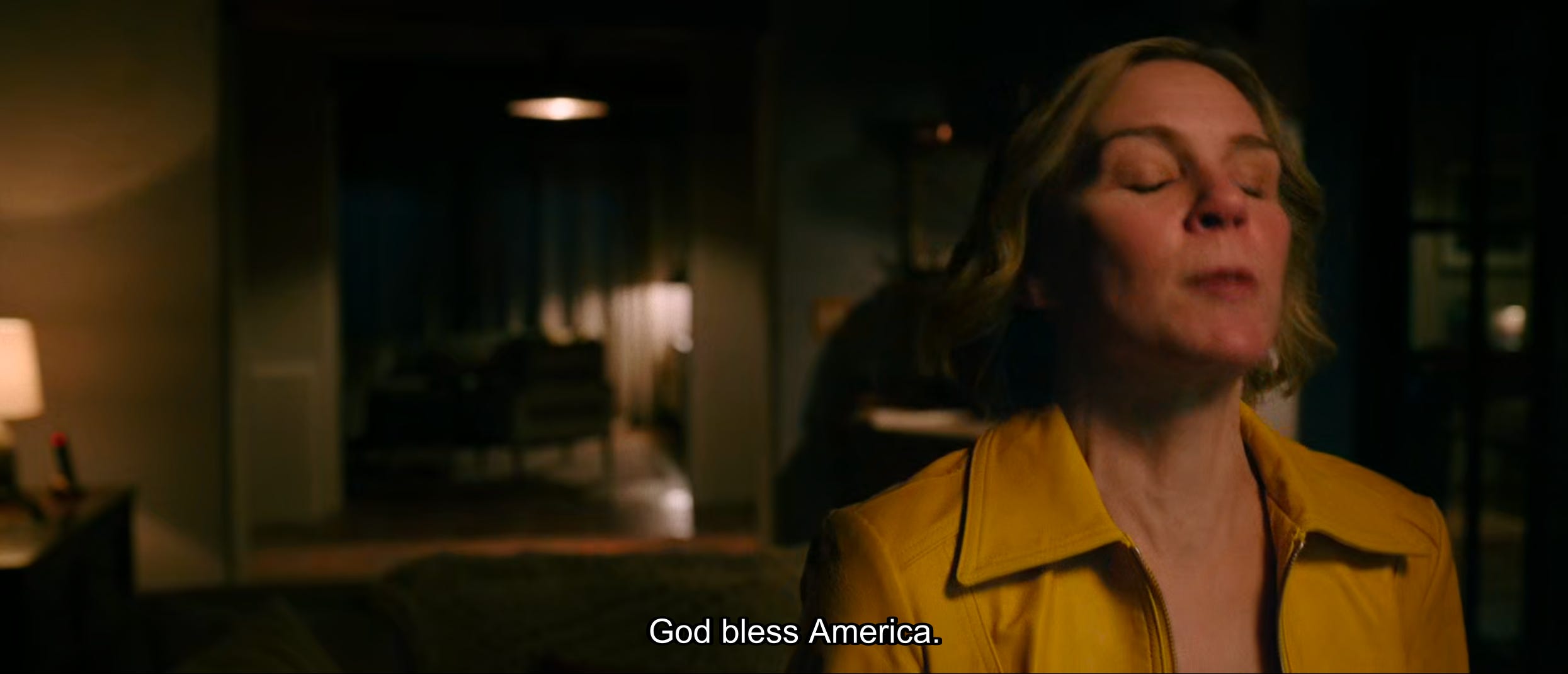
This shot is just brilliant. The fact that it’s off-center, she’s facing the wrong direction, her eyes are closed. This is the last moment, presumably of the entire series, where Carol has some hope of normalcy returning.
And then there’s this:
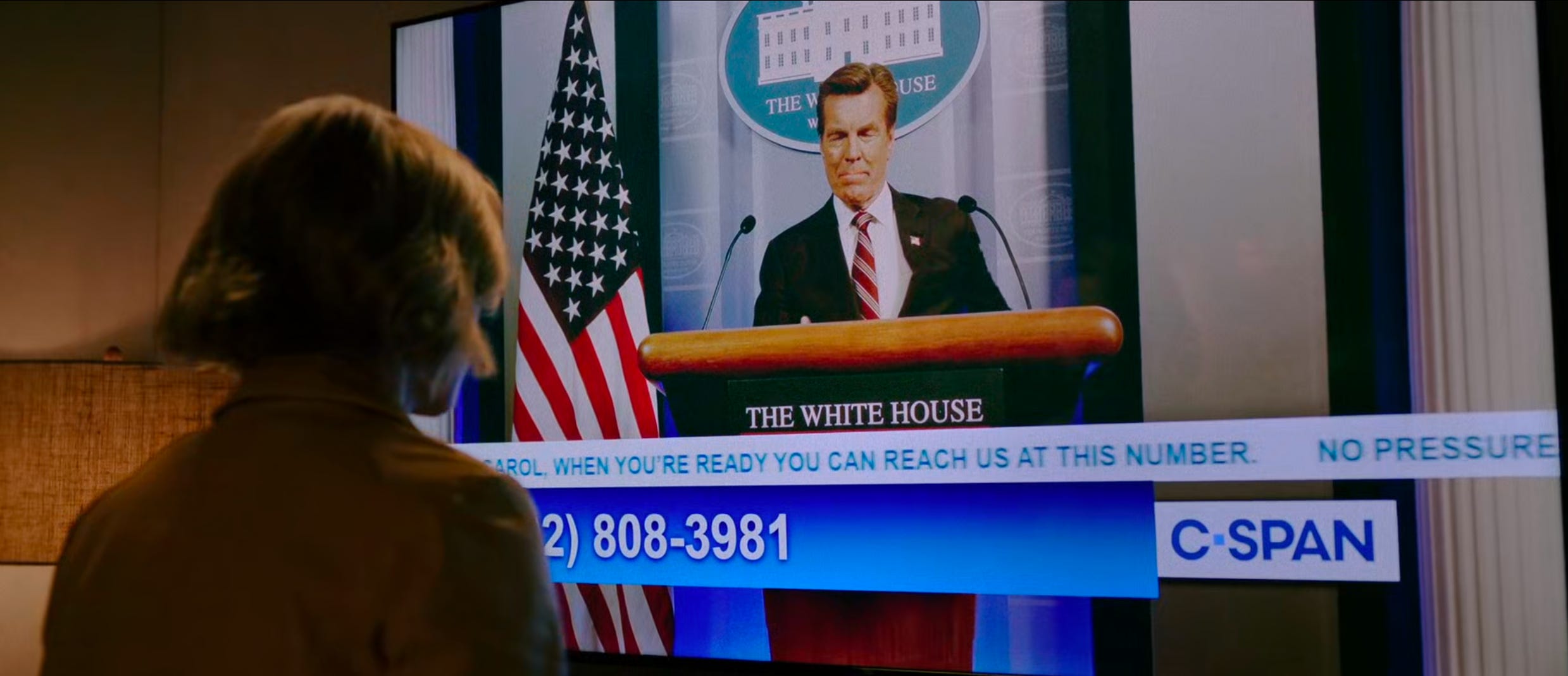
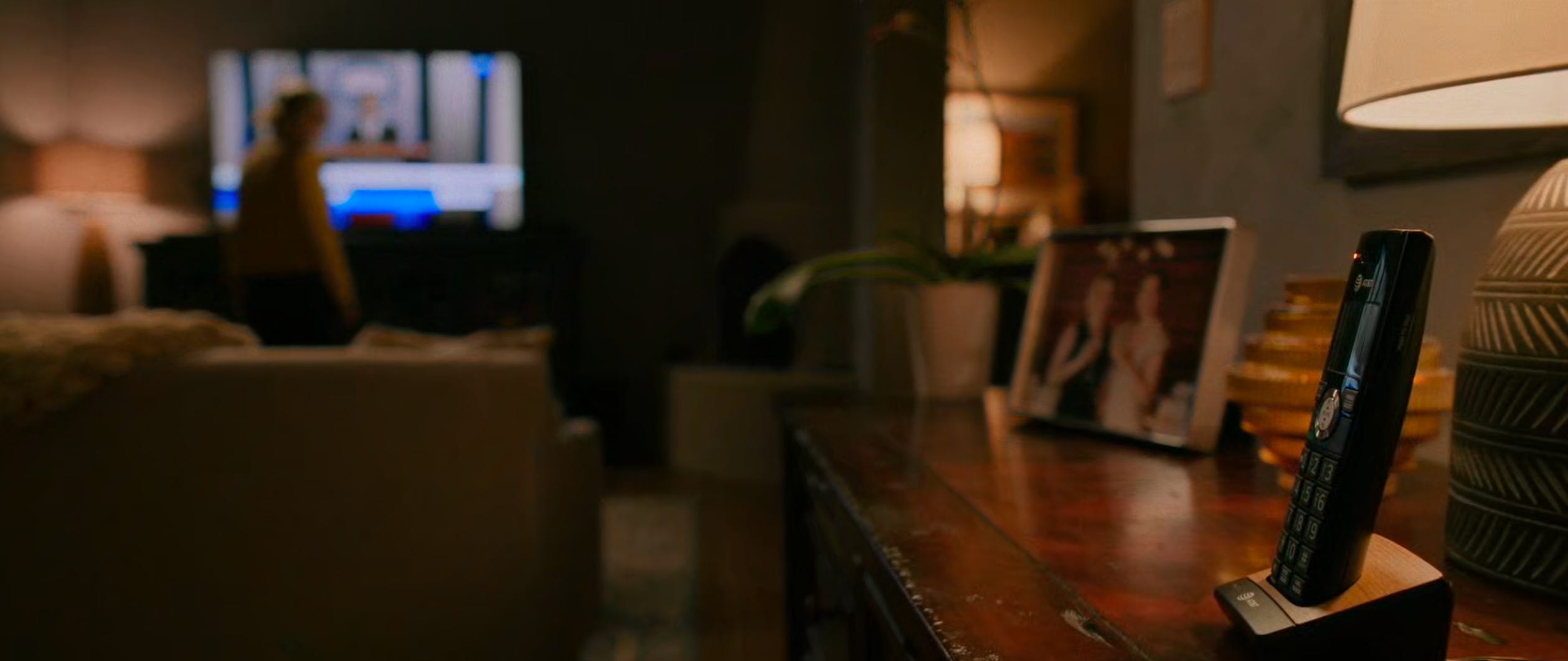
(Hey, by the way, all the phone numbers are real. Go ahead and dial them, see what happens. (202) 808-3981)
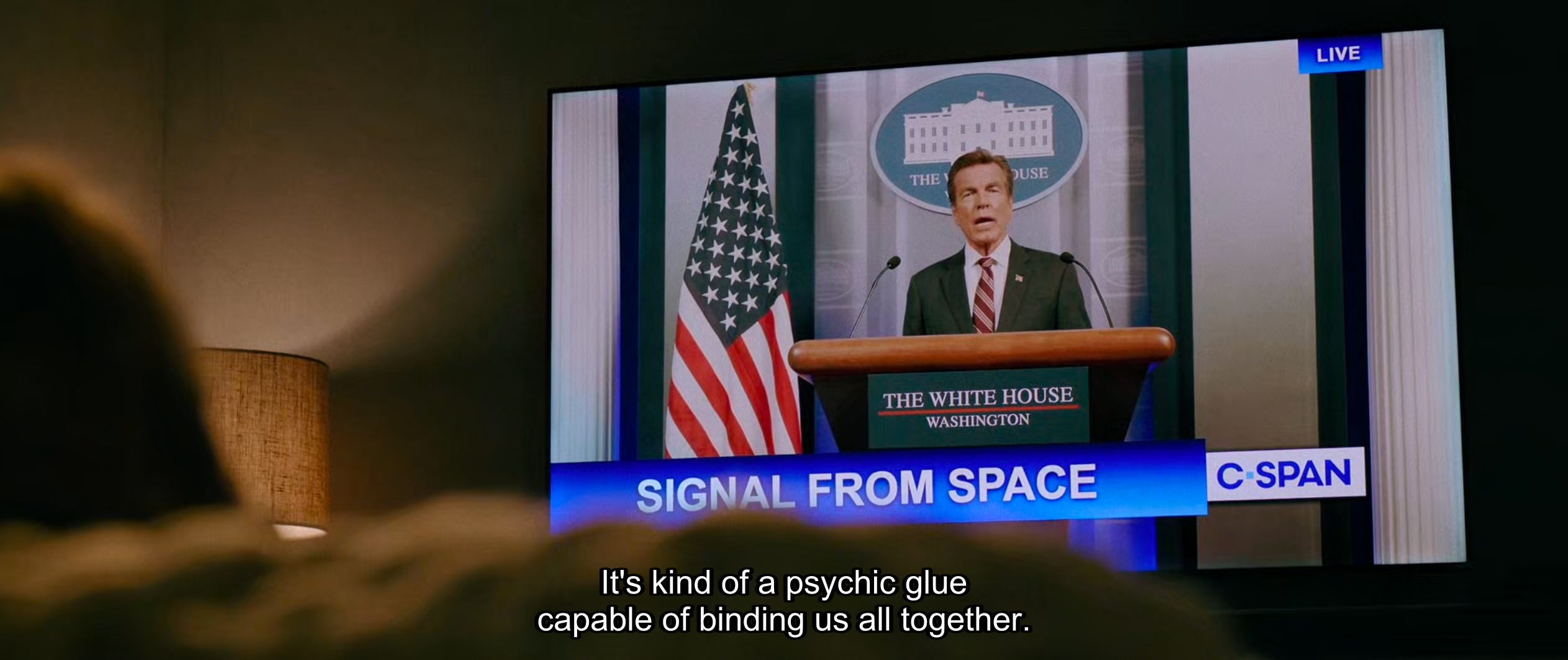
“You are currently talking to every person on Earth.” This is a huge point. We have to hold the show to this logical position for the duration. It’s Carol vs the Entire Population.
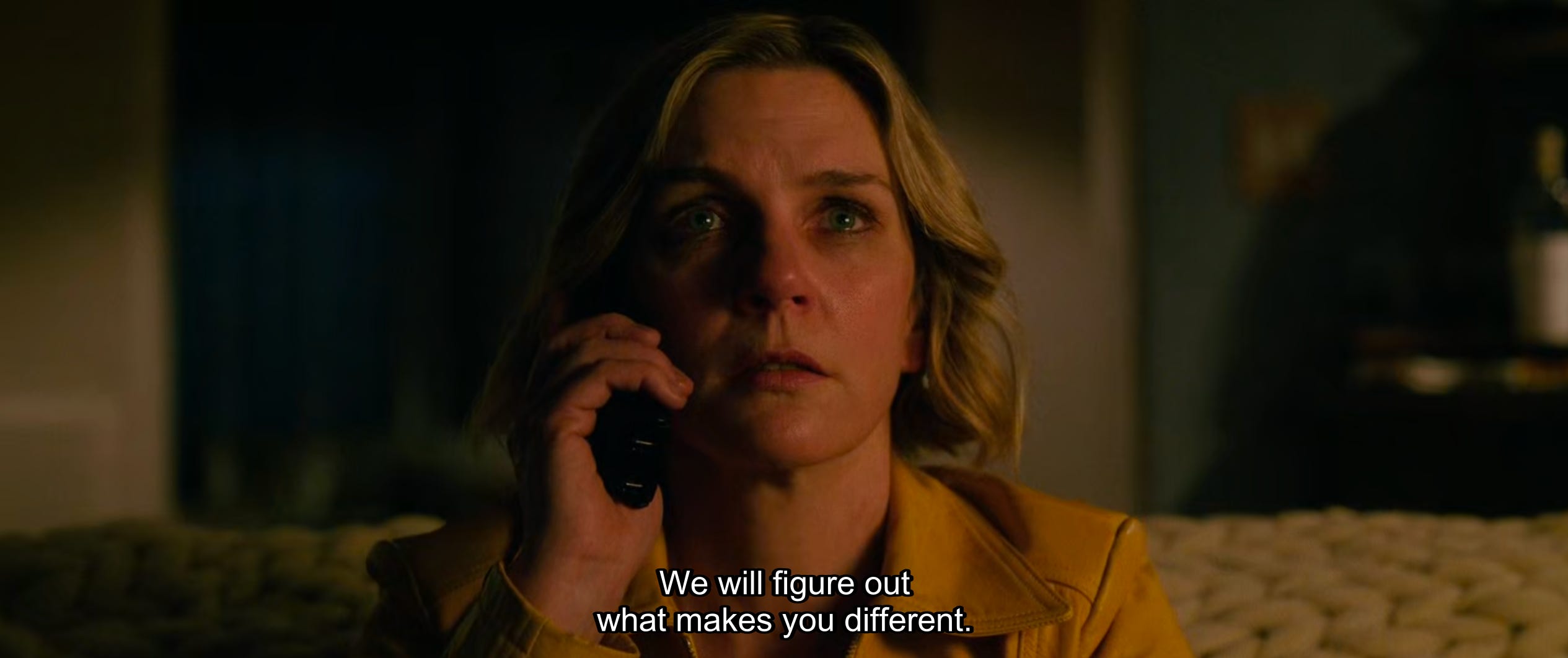

And here is the narrative question of season one: why didn’t Carol become part of the collective? The show effectively promises us an answer to this by the end of Episode 9.
As for the thematic question—what are the necessary conditions for happiness—well, who knows. That’s presumably unanswerable.
Well, what do you think? What did you think of “We Is Us?” Will you stick around for Episode Two? Are there details that we’ve missed that we should address in the next breakdown? Let us know:
Do you know people who are watching the show who might enjoy this breakdown? Please feel free to forward and share.
I didn’t finish Breaking Bad, and I didn’t watch Better Call Saul at all. The first season of BB was fine. It was good. It was really good. Everything about it was good. I just didn’t like it at all. I can’t stand watching people who don’t like each other, and not one character on BB likes any other character. I get that the whole point of the show is the misery that comes along for the ride when people are trapped by economic circumstances out of their control, but it’s not what I call entertainment.
On the other hand, one big reason we love The X-Files is the Mulder/Scully chemistry.
But then the other thing that bugged me was the first episode of BB S2. It opens with a teddy bear in a swimming pool, and I thought, “I’m not going to wait around the entire season to pay to see the payoff of this silly soggy setup.” I’m just so sick of the Goodfellas-style I-guess-you’re-wondering-how-I-got-here structure of storytelling. So I never made my way to BCS, which is probably my loss. I probably missed a lot of great TV. Someone who knows: can I watch BCS without finishing BB?
And of course, also, BB, BCS, and The X-Files.
One fictional novelist we do see writing on screen is Joan Wilder, played by Kathleen Turner in 1984’s Romancing the Stone. Joan Wilder loves being a romance novelist, and she would prefer to stay at home and write than go on her adventure with Michael Douglas. Has Carol seen Romancing the Stone? We might suppose that, in the Plu1bus universe, Michael Douglas, Kathleen Turner, Danny DeVito, and Robert Zemeckis are all part of the collective now.
Although of course it is that as well, Marshall Adams, take another bow.
Of course it’s hard to know without having yet seen the whole season...
Loved your commentary on the show (and loved the first two episodes). I will let you know that my co-writer and I did have our book launch at Barnes and Noble in Scottsdale. Now, this was some 20 or so years ago so things were a bit different than they are today. But still…
I was reading last night when my husband started to watch the first episode of “Plur1bus.” My eyes kept drifting over to the TV. I thought it was good, but since I was reading, I was viewing distractedly. You post filled in the missing pieces.