

PLUR1BUS Explained (part 3)
Breakdown of S01E03, "Grenade"

This is Part 3 of a nine-part episode breakdown of the Apple TV series Plur1bus (pronounced “pluribus”). Find Part 1 here, and Part 2 here. This post is spoiler-heavy. If you haven’t already and want to, go watch the show now and then meet us back here.
First, few things We missed from Episode One: Carol and Helen are definitely married. Holding hands in the taxi is the first clue. The way Carol cuddles up to Helen outside the bar is a second. Carol calling Helen “baby” when she wakes up before dying is the third clue. We see both sets of luggage just inside the front door. And we do get an in-focus shot of the picture frame on the bureau—it’s their wedding photo. We are ashamed to have missed all these obvious clues. On the other hand, some of the dialogue led Us to believe that maybe they were former lovers:
Did you bring your cigarettes?
Since when do you smoke?
Since now.
As far as We are concerned, that is not how a married couple speaks to each other. Did you bring your cigarettes? Carol would know if Helen, her wife, brought “her” cigarettes, and would simply ask, “can I have a cigarette.” This seems deliberately designed to put us off the trail and We don’t understand why.
The other element that obfuscates the relationship is the conversation about the person who inspired Raban. Again this didn’t feel like real dialogue so much as it felt like deliberate hiding.
(And of course We get that dialogue is stylized speech, it’s not actually how people talk. We sometimes talk about “realistic” dialogue in fiction or drama but dialogue is never realistic. Dialogue is serving the purpose of a story. Dialogue is revealing information. Revealing in a very structured manner. And when actors improvise dialogue, it almost never works. An actor might improvise a hundred lines and maybe we get to see five of them. But We digress. I don’t think these actors are improvising their dialogue. Sure it was quite deliberately written. But this felt more like it was designed to hide things than to reveal things. Here’s a breakdown of some dialogue from the pilot episode of Severance.
Anyway. On to episode three.1


Carol has some frozen eggs somewhere. That’s interesting. Wonder where they are. How did the Joining affect babies? Pregnancies? Conception? There are no “throwaway” lines. Dialogue, however seemingly insignificant, directs our attention.


Helen is everything good in Carol’s life.
Staring at the Northern Lights can give one a sense of existential dread. This is exactly the wrong feeling for Carol.
On the plane Carol has questions for Zosia. She asks about the other immune people. “Isn’t there an expert of some kind?” Carol asks. At the question “Is anyone an expert?” Zosia perks up and responds immediately, “Oh yes, according to Time Out magazine….”
And now We’re certain this show is about AI. Carol doesn’t want an expert in cooking udon noodles. She wants an expert who could possibly help her figure out what the Joining is and how to reverse it.
We learn a little bit more about the “Gentleman from Paraguay” who “has been reluctant to communicate with us.”
Paraguay man, aka Manousos, says to Carol, “no me jodan más! Déjenme en paz, putas!” According to Anthropic’s Claude, this means, “Don’t fuck with me anymore. Leave me alone, bitches.” Carol calls back to say, Chinga tu madre, cabrón, which means, “fuck your mother, asshole.”
Presumably Carol’s cursing at him will clue him in to the idea that Carol isn’t part of the Unity, and possibly lead to their meeting later on in the series.

How old is Carol supposed to be? She and Helen have at least two landline phones. We’re not sure We know anyone who has even one. Actor Rhea Seahorn is 53, and Miriam Shor is 54-- both solid Gen Xers… All right, We guess We believe that they have landlines.
Come to think of it, We can also believe that a GenXer owns Golden Girls on DVD, unlike borderline millennials who would just watch it streaming on Disney+.
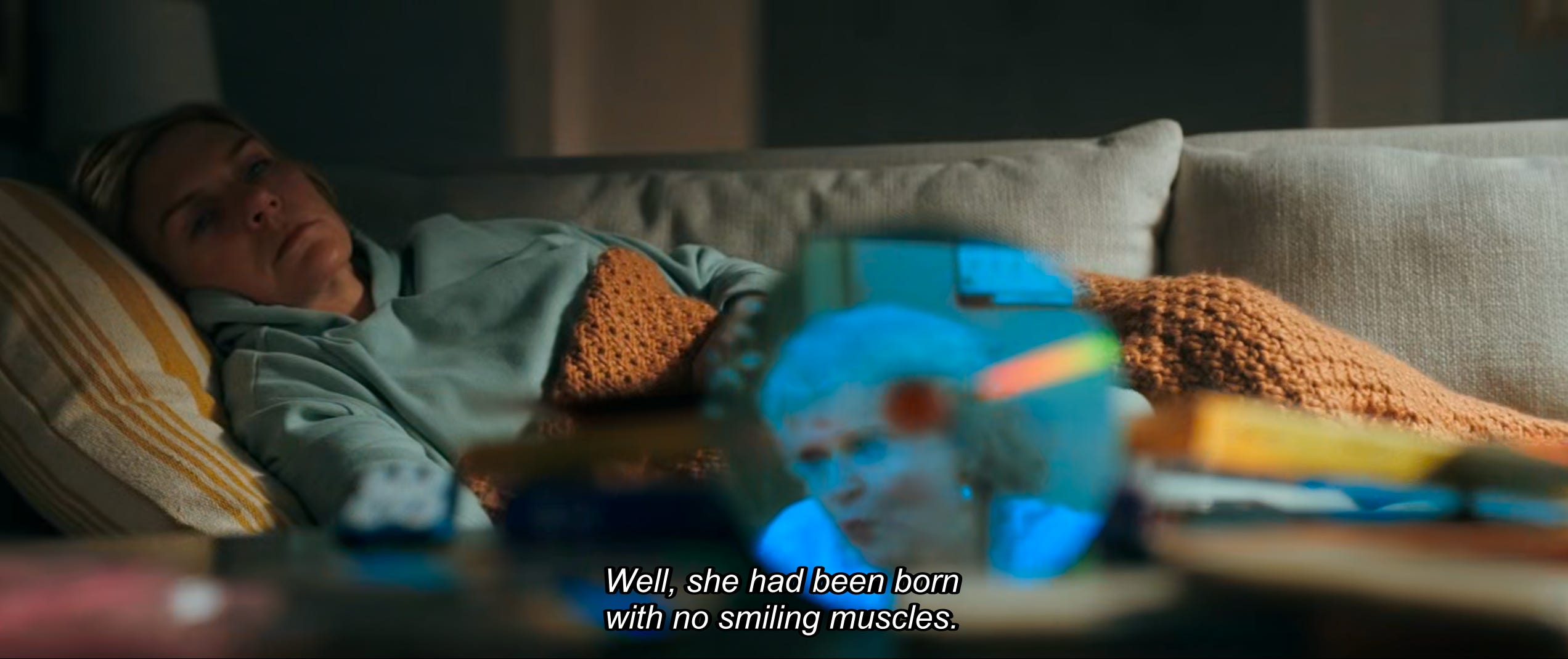
The episode of the Golden Girls that Carol is watching is Season 3, Episode 15 “Dorothy’s New Friend,” which first aired on January 16th, 1988. According to IMDb, this one is about Dorothy’s friend, a local author who is not very kind to Rose and Blanche. Get it? An unkind author? Like Carol? Nothing is random.
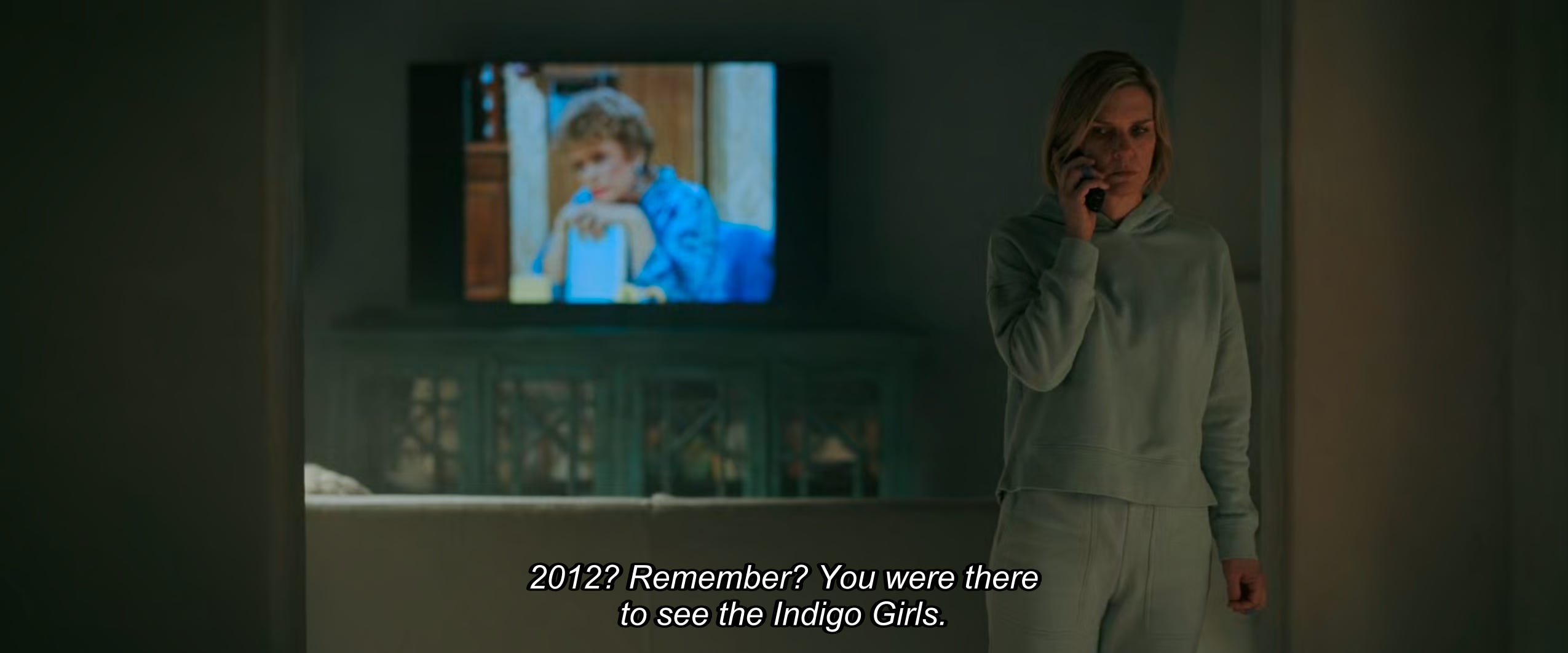
Carol’s grocery store is called Sprouts Farmer’s Market? Oh, come on. That is definitely a Whole Foods disguised for TV, right? No? Sprouts is a real supermarket chain headquartered in Phoenix, employing over 35,000 in more than 400 stores in 24 states? Well dang.

Here’s one thing the show is doing: it’s pointing out how much more efficient our systems could be if we were united in purpose. Fortunately or unfortunately we are not united in purpose. We have individual wants and desires.
Maybe we’re talking about communism here. Within the Unity, no one has power—or do they? Zosia isn’t toiling; she’s taking care of Carol. That seems like it would be a coveted position. But is there any more coveting? We don’t think there’s any more coveting. There’s toil and there’s injury. But is there suffering? Has suffering been purged from the universe? Is Carol the only person suffering?
Is the Unity actually happy or are the individuals merely smiling?
Maybe Carol is the only person capable of being happy because she’s the only person capable of suffering.
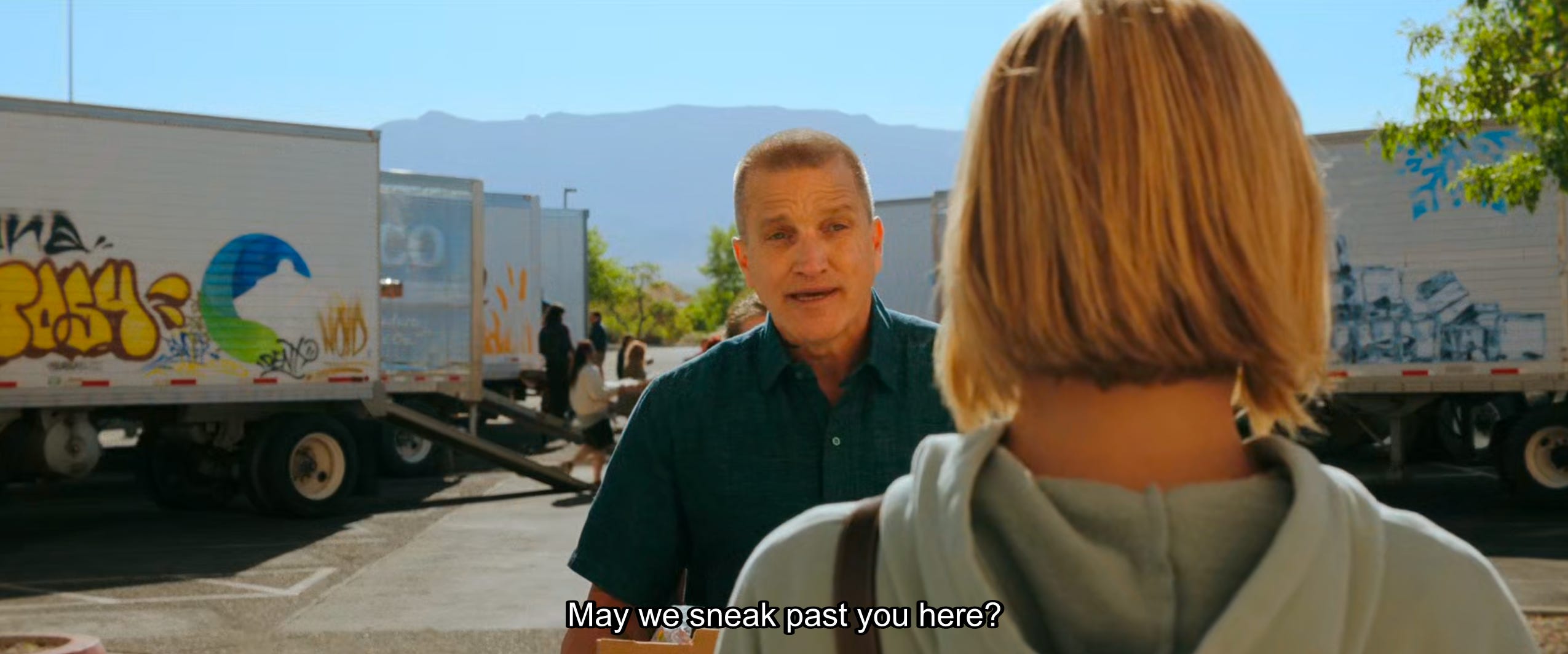
We need to linger on this line, “may we sneak past you here?” Of course there’s no sneaking going on here. We use this phrase, this word, “sneak,” in everyday speech. We don’t mean to get by without being seen. What we mean is, I don’t mean to disturb you; I just want to get by. This casual line in this context is uncanny. Of course he doesn’t mean “sneak” as in to not be seen. These Unity people couldn’t be more conspicuous. He means to use it in the colloquial way, the everyday way. “I don’t mean to disturb you.” But even that seems odd and out of place here. This is the way AI chatbots speak—a friendly corporate everyday speech that sounds uncanny coming out of a machine or a collective voice.

Notice the precision in how they enter the store. Just imagine the possibilities of being united in purpose and understanding.
The Unity puts together the grocery store in just over one hour:
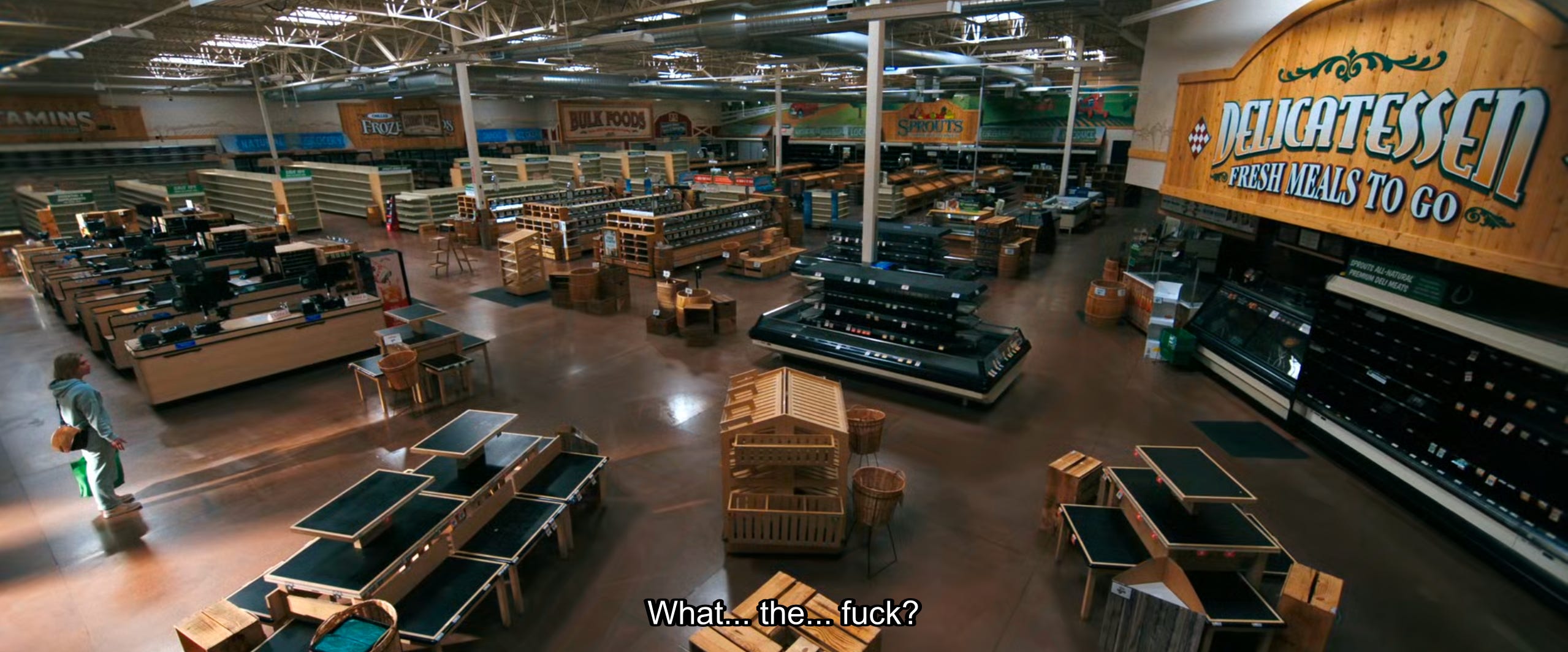

We’re believing this? We’re believing that the entire grocery store went back together this quickly with fresh produce? There hasn’t been fresh produce in days unless the farms are still active. Is there meat? Milk? Bread? Seems like a logical problem here.
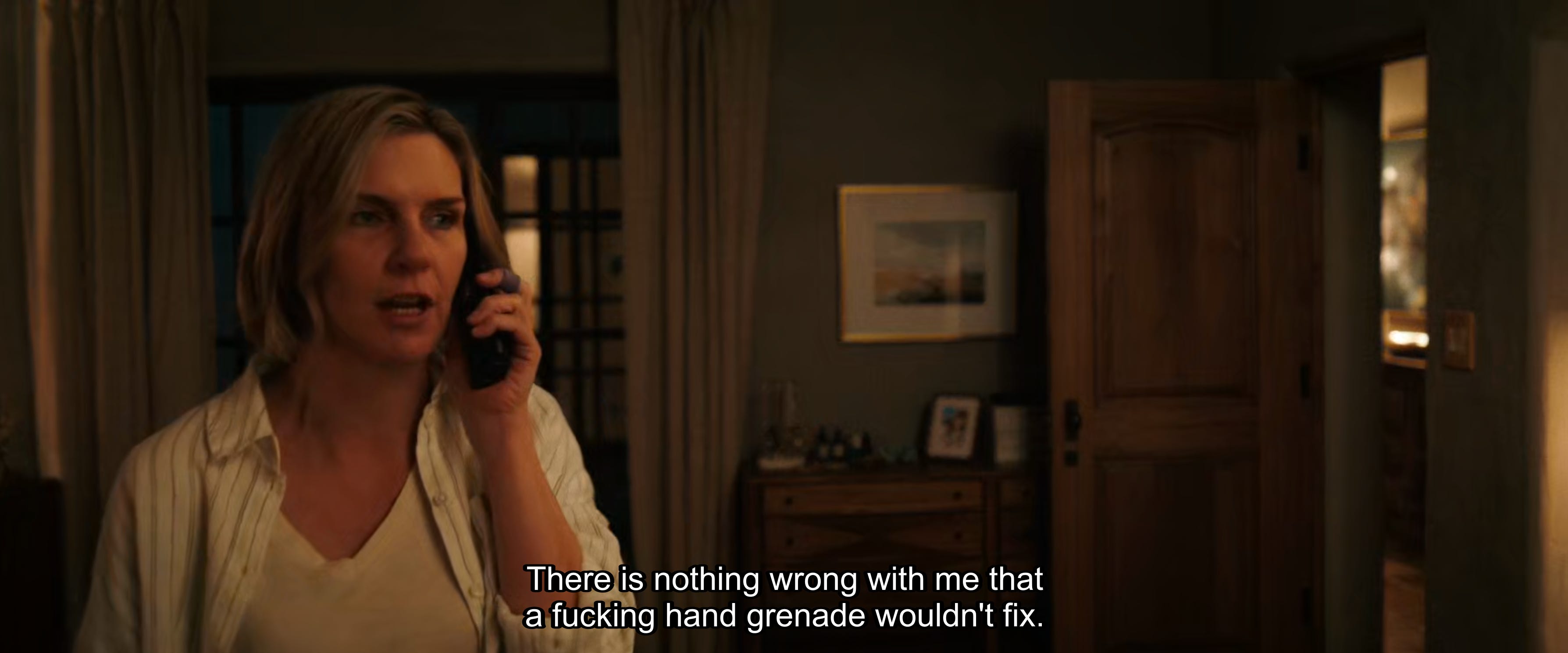
The electricity goes out. Anytime electricity goes out in a movie, it’s a metaphor for power of some kind: political power, social power, economic power, sexual power. Strength. In this case our attention is called to the struggle between Carol and the Unity; who has more power?
Carol invites Zosia in for a drink. Zosia explains the etymology of “vodka” and “whisky.” She can make small talk. But can she actually have a real conversation? No. Just like a chatbot, Zosia appears to be listening, but here is she simply responding to prompts. Zosia is charming because she is beautiful, not because of what she says.
Carol asks how long before she joins the Unity. Zosia answers vaguely: weeks? Months?
“That’s quite the range for someone who knows everything there is to know.”
Great line, Carol, but you’re making a classic mistake of mixing up known facts with what can be reliably predicted. Herein lies the difference between what we can look up and how we need to find out.
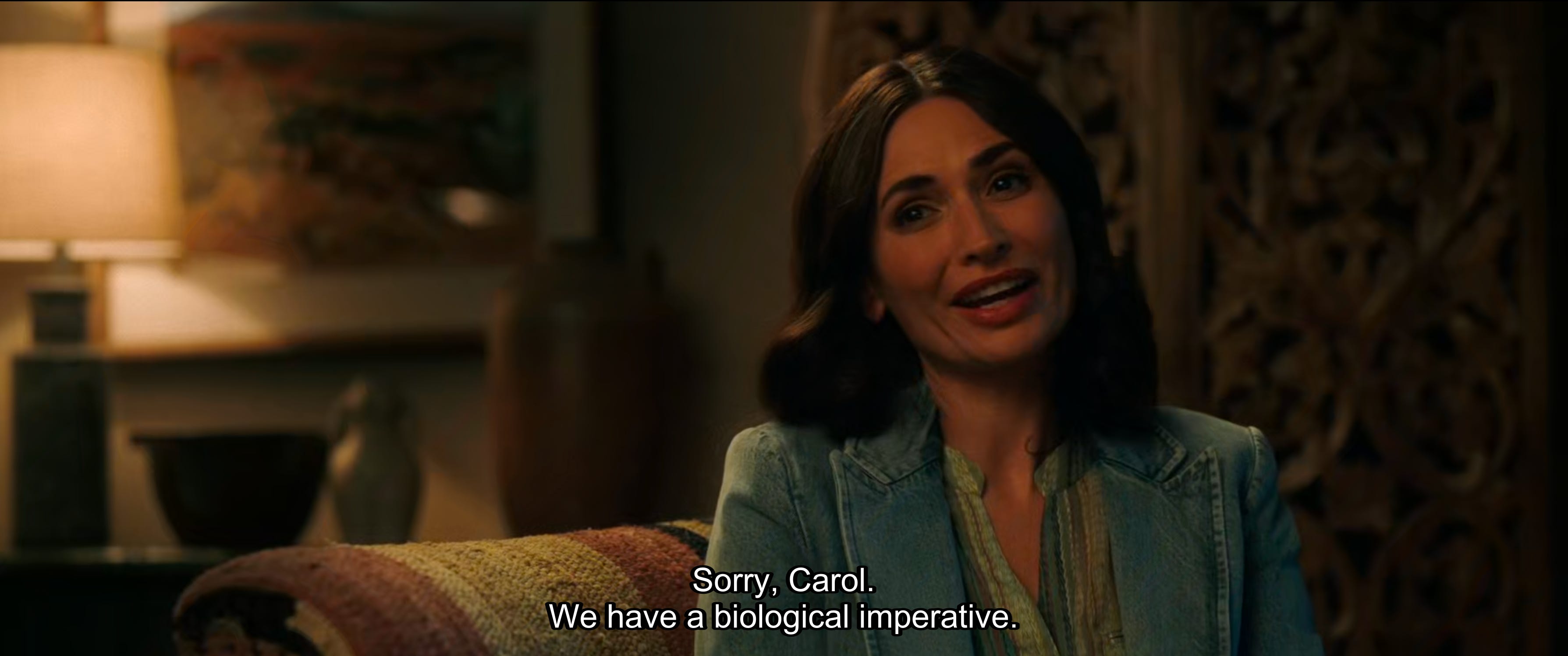
“Carol, if you were walking by a lake and you saw somebody drowning, would you throw him a life preserver? Of course you would. You wouldn’t think. You wouldn’t wait. You wouldn’t try to get consensus on it. You’d just throw it.”
“So now I’m drowning?”
“You just don’t know it.”

Aw dang her truck is on fire. I liked that truck. Now we know there are real consequences.
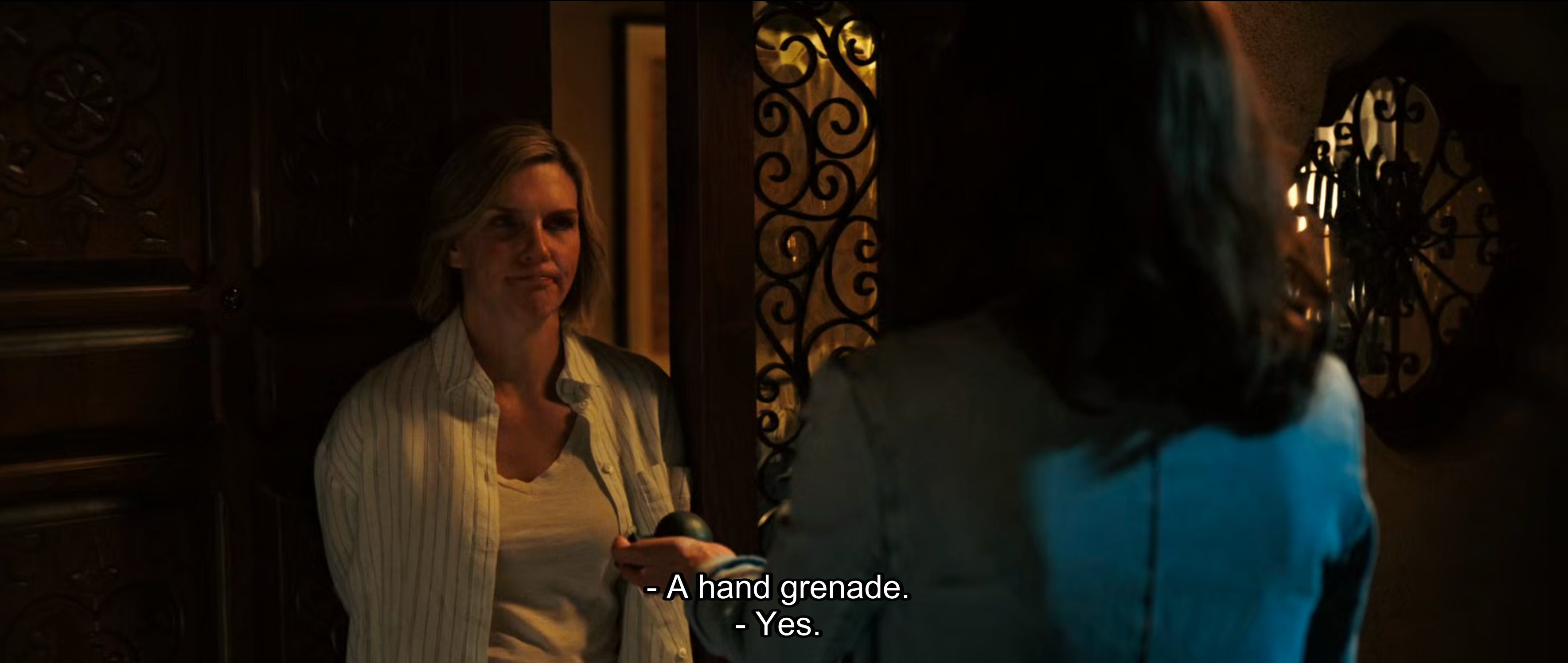
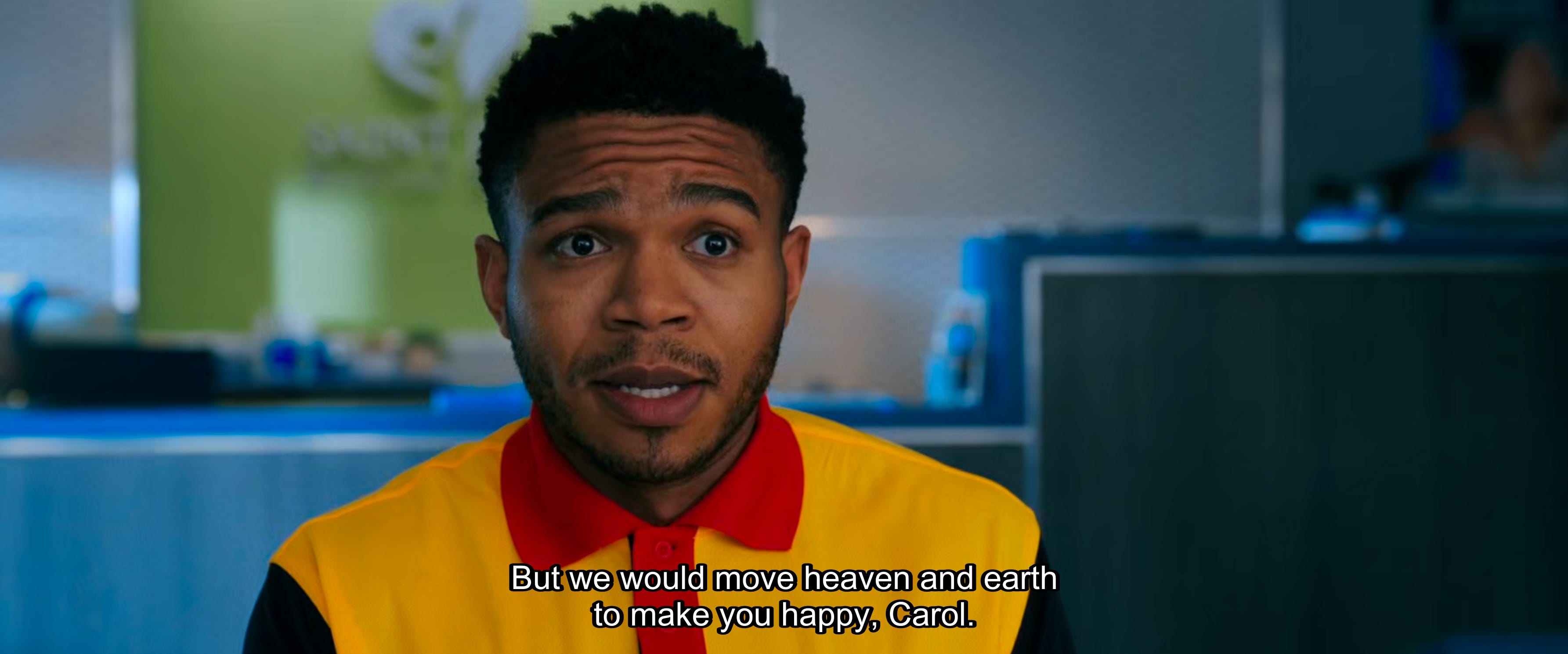
At the hospital, confronted by a representative dressed as a DHL delivery person, Carol asks, “Why would you give me a hand grenade? Why not give me a fake one?”
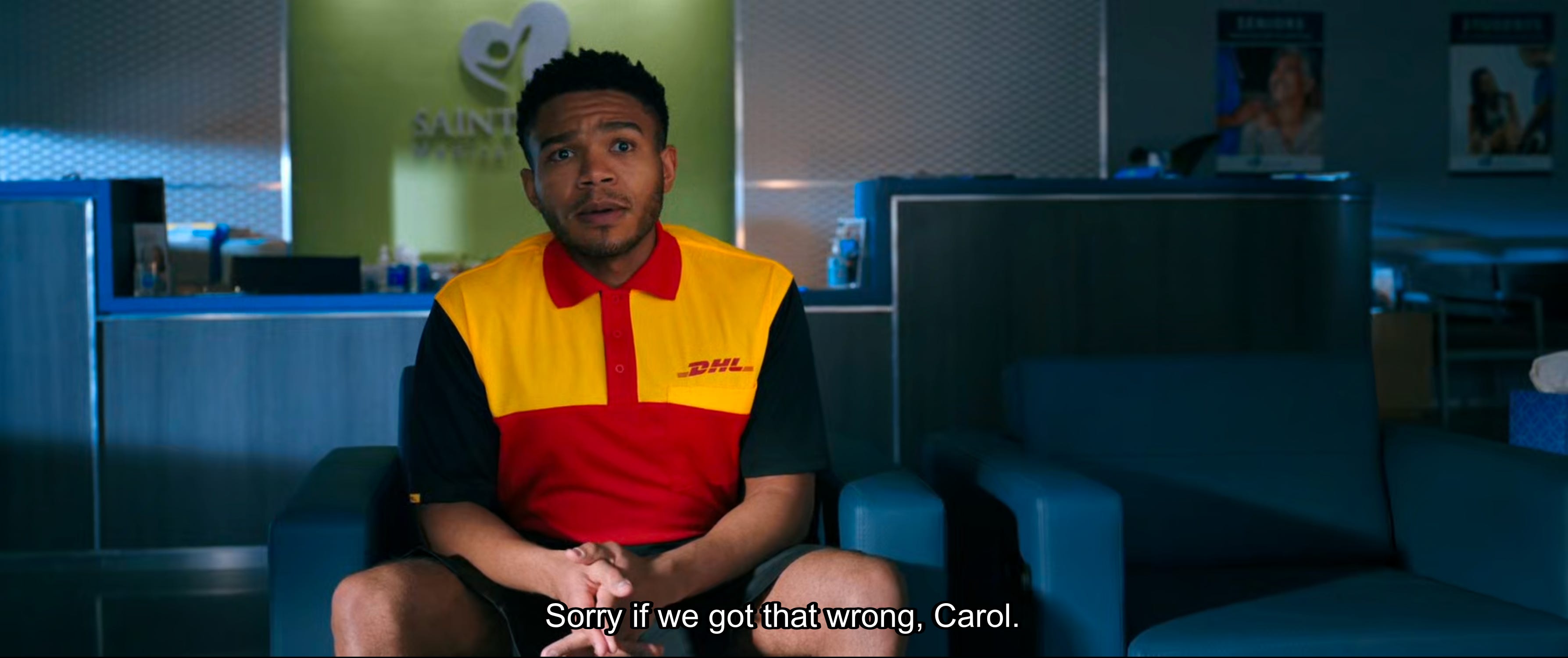
SORRY IF WE GOT THAT WRONG! This answer is—and now there is no mistaking—exactly the way an AI chatbot answers when it gets caught hallucinating.
Carol escalates: “Well would you get me a bazooka? A rocket launcher? How about a tank? How about an atom bomb?” Why would you want a nuclear weapon? The DHL man answers.
Ulitimately, yes, Carol would get a nuclear weapon if she wanted one.
End of episode three, Carol realizes how much power she really has here.
Questions we’re left with at the end of episode three
Why does the Unity (should we call it the Unity?) want Carol to be happy?
Why not just kill her?
Who is the man in Paraguay? He’s sort of like the information that AI doesn’t have access to because it’s not on the internet. Carol’s insulting him will clue him in to the idea that she actually isn’t part of the unity.
How did the Unity trigger the global event? Was it in the food? Drinks? Was it something to do with those planes in Episode One?
Has the show set up a Carol-Zosia will-they-won’t-they?
Can the Unity lie?
Here’s an odd connection that is almost certainly This Individual’s own projection (which, by the way, this is how you know—in case you were wondering—that this post was written by a person, not AI, which I’m not opposed to, by another way… anyhow…): We wonder if philosopher /neuroscientist /podcaster /meditation guru /world’s-most-famous-atheist
consulted on this series. Here are four reasons why We wonder:The show feels like an AI doom scenario with the Unity as a metaphor for a singular unified superintelligence. Harris has released several podcasts on this topic. He’s infamously concerned with what is known as the “alignment problem.”
“Your life is your own” and the implications of this refrain feel like an invitation to argue about free will—another topic Harris holds dear. He’s written and podcasted about it extensively. Is Carol’s life truly her own, or are her actions determined by her environment? The show seems to want us to have this conversation.
Zosia offers Carol a version of Peter Singer’s shallow pond thought experiment, another one of Harris’s go-to’s for explaining the mistakes we might make about our own altruism. Here’s Singer’s own words:
One day you’re walking across a park and in this park there’s a pond. There is something in the pond splashing around and when you look closer, you’re shocked to see that it’s actually a very small child. Not a teenager who could stand up, but a child too small to do that, and the child seems to be drowning. You rush down to the pond. As you do the thought occurs to you: “Damn, I’ve just put on my most expensive shoes and fine clothes because I’m going to this important occasion and I don’t have time to take them off if I’m going to save the child. But they are going to get ruined if I jump into the pond in them.”
So then perhaps the thought might occur to you: “Is this child really my responsibility?” I didn’t put the child in the pond. Not my child—I’ve no idea why the child’s in the pond. I could just go on my way to my meeting and would I have done something wrong?”
Yes, that would be quite an awful thing to do. Only a terrible person could do such a thing. Then I point out that we’re really all in this situation. Not that we are rescuing children out of ponds, but that for relatively modest amounts of money we could save the life of a child because there are children dying, for example from malaria, and we know how to save those lives.
If, rather than save the life, I want to save my money to spend it on some new clothing, then am I any different from the person who walks past the child in the pond?
Finally: Carol’s comfort show is The Golden Girls, which was created by Sam Harris’s mother, Susan Harris. Susan created several programs, Golden Girls being the most successful. We sort of assume that successful showrunners run in small circles. So maybe Susan and Vince Gilligan know each other. And maybe this is all a coincidence in This Individual’s head. Like, we’re Tommy Westphall. (Golden Girls crossed over with Empty Nest—a spin-off of Golden Girls also created by Susan Harris—which had crossovers with St. Elsewhere, and as we learned in Part 2 of this series, St. Elsewhere is the nexus of the Westphall Universe and and and and and
What did you think of Episode 3, “Grenade?” What did We miss in this breakdown? Is the show really a metaphor for an AI doom scenario, or should we take it at face value?
Do you know others who are watching an enjoying Plur1bus and might also enjoy this close read breakdown? Please share this post!
Are you an altruistic Individual who likes to support independent writers?
Look out for Part 4, a breakdown/close read of “Please, Carol,” next week. Thanks for reading!
All images, except where otherwise noted, are screenshots from Plur1bus, and are owned by Apple TV.
Sprouts is a small version of Whole Foods. It used to be owned by Amazon as well and likely still is.