

PLUR1BUS Explained (part 5)
Breakdown of S01E05, "Got Milk"

Welcome to part 5 of a nine-part episode breakdown of the Apple TV series Plur1bus (pronounced “pluribus”). This post is spoiler-heavy. If you haven’t already and want to, go watch the show now and then meet Us back here. If you’ve been enjoying this series, please let us know by tapping the Like button. It means a lot to know that you’re out there, somewhere.
Find previous installments here:
One important thing We missed from Episode 4:
We learn that when Carol was 16 and “beginning to understand” herself, her mother sent her “to conversion therapy camp in Covington, Tennessee, Camp Freedom Falls… a terrible experience… some of the worst people… ever known. They smiled all the time.” She never forgave her mother. This explains why she doesn’t seem to miss her parents, and it goes toward her choice to make Raban a man, why claiming George Clooney as an influence is “safer.”1 Carol has lived through many unsafe moments.
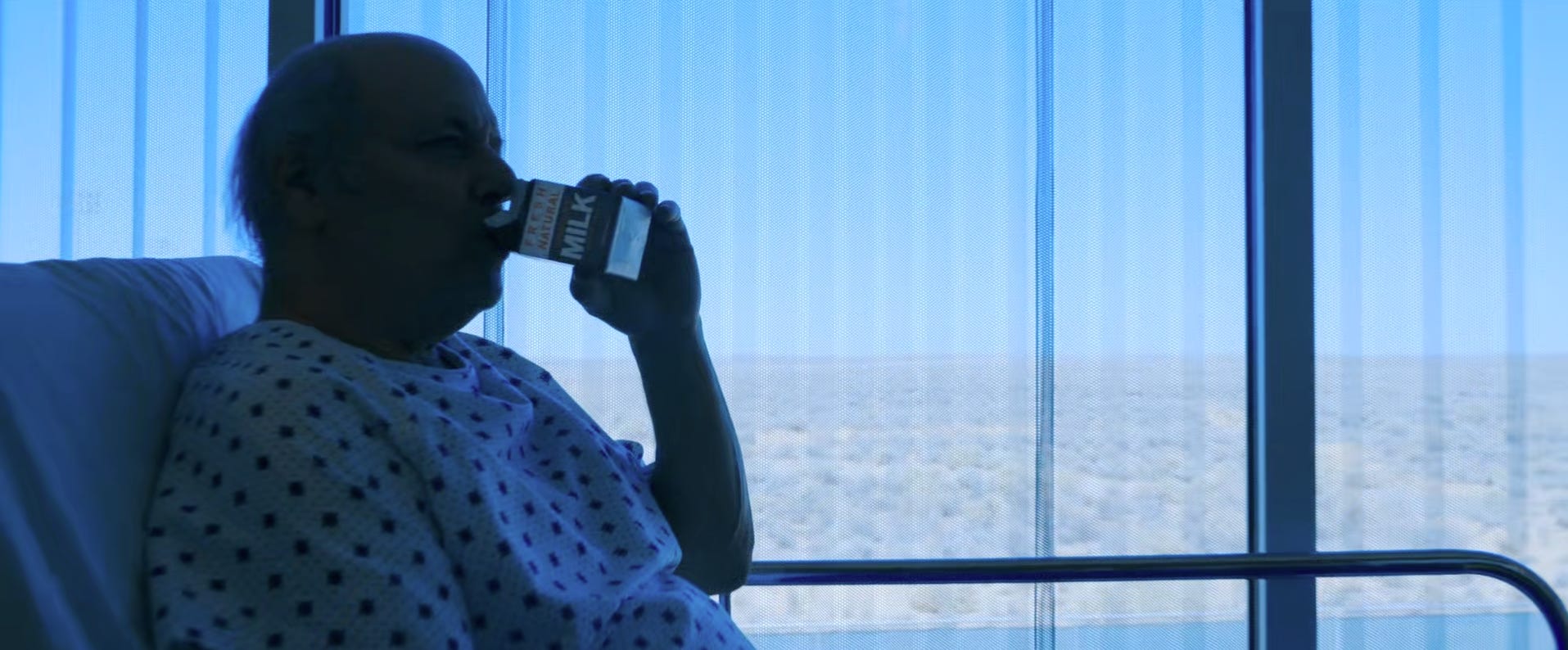
The episode title is a reference to a series of TV and print ads for—surprise—milk. The ads ran from 1993-2014. The first was directed by—can you believe it?—Michael Bay, who, at the time, was most famous for Meat Loaf: I’d Do Anything for Love (But I Won’t Do That). Here you go:
You’re welcome.
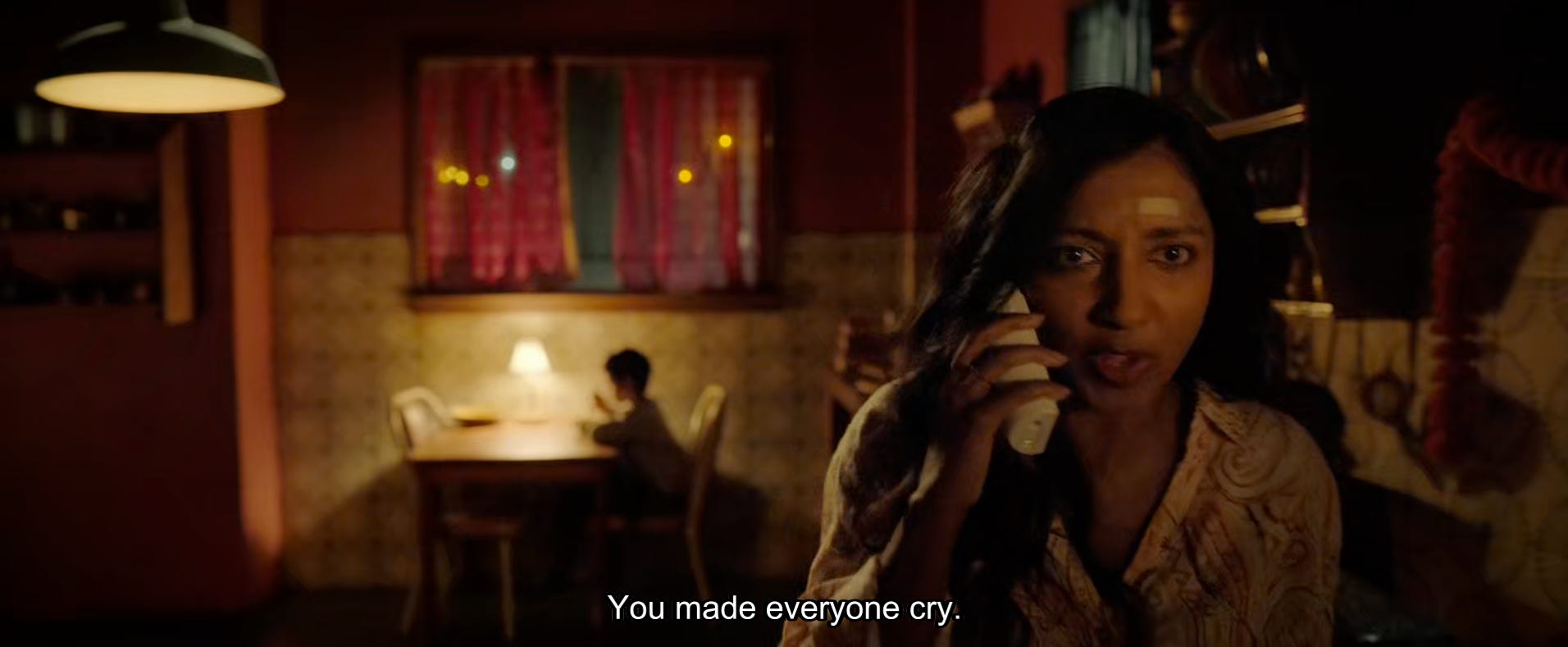
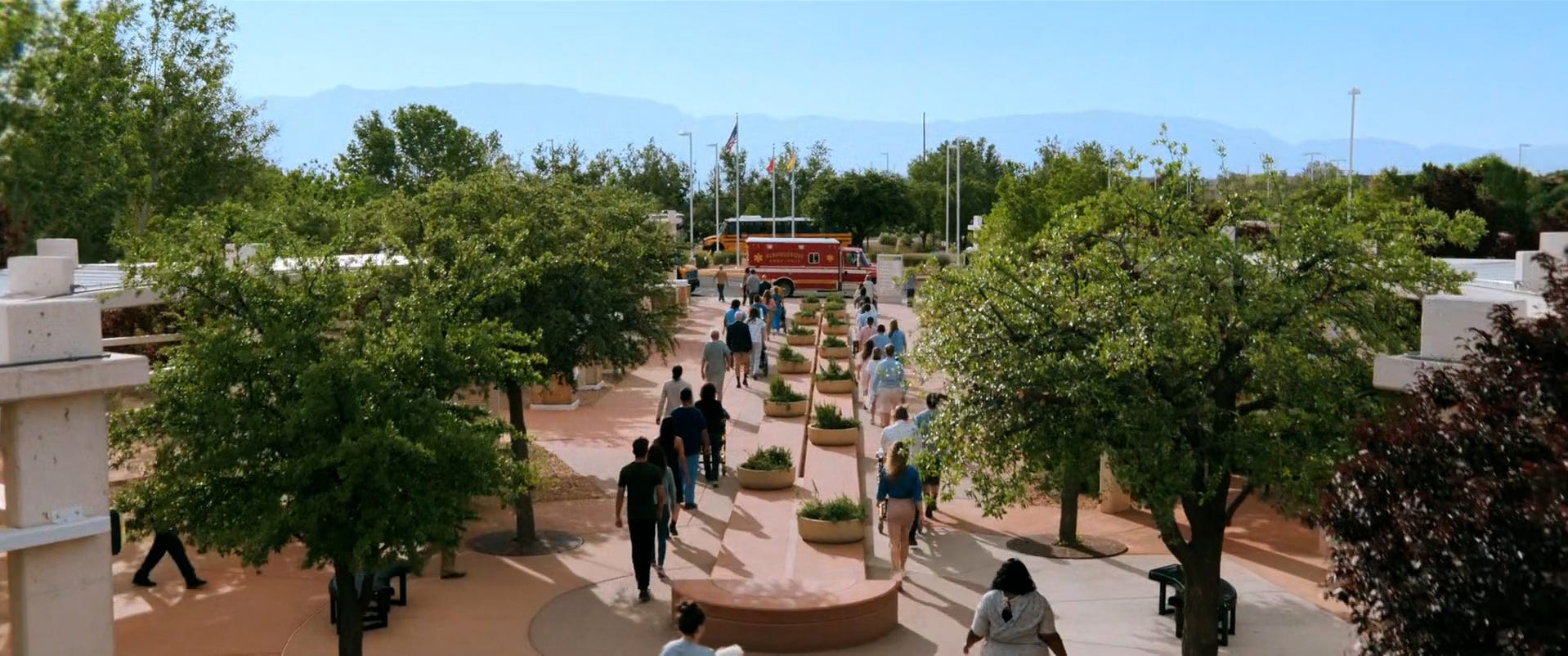
The hospital exodus, which consists of two well coordinated one-shots and a time lapse of shadows moving across a floor, is accompanied by singing, a European religious canon. At first We thought the singing might be diegetic, that the Joined might be lifting their voices. But no, this is soundtrack, for viewer’s ears only. The music is “Deo Gratias,” written in the fifteenth century by Johannes Ockeghem. “Deo Gratias” means “thanks be to God.”
Where is God? Carol is kind of like a vengeful god. How many survivors are there? Twelve. How many gods lived on Mount Olympus? Twelve. How many disciples had Christ? Twelve? How many drummers drumming?
Are any of the survivors religious?
Does anyone sing anymore? What’s everyone doing???
Hello Carol. This is a recording. At the tone you can leave a message to request anything you might need. We’ll do our best to provide it. Our feelings for you haven’t changed, Carol, but after everything that’s happened, we just need a little space.
We hear this message 4 times in this episode. The voice is familiar, but We can’t place it.
Carol climbs to the top of the 12-storey Crowne Plaza Hotel and finds the entire city emptying out. Bye bye.
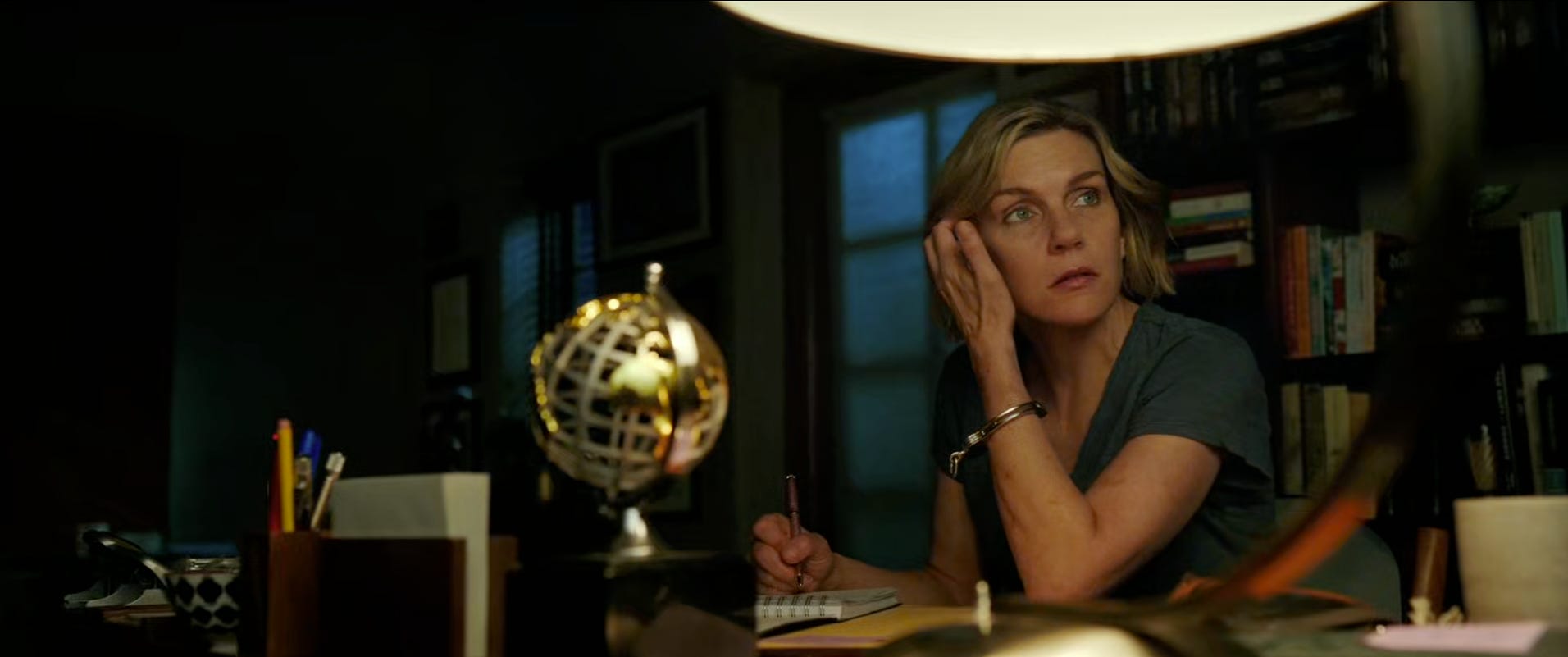
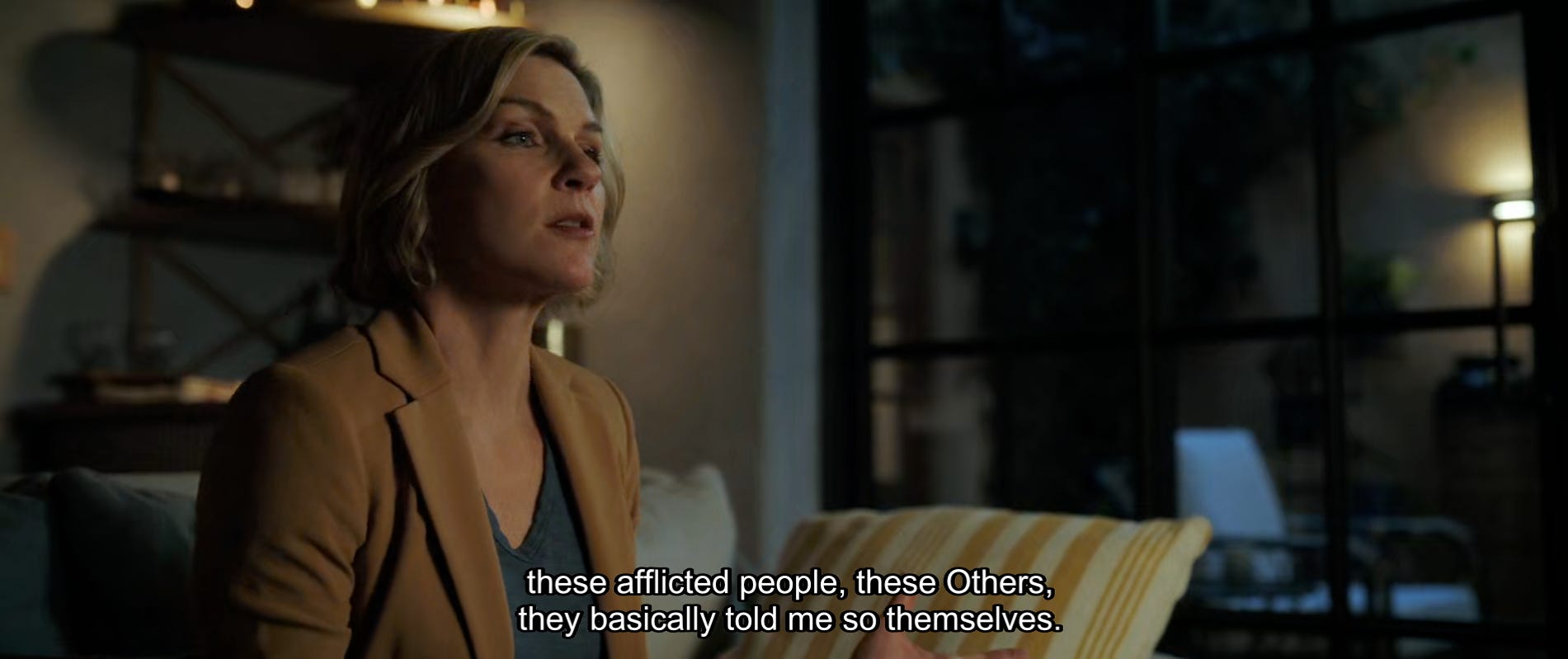
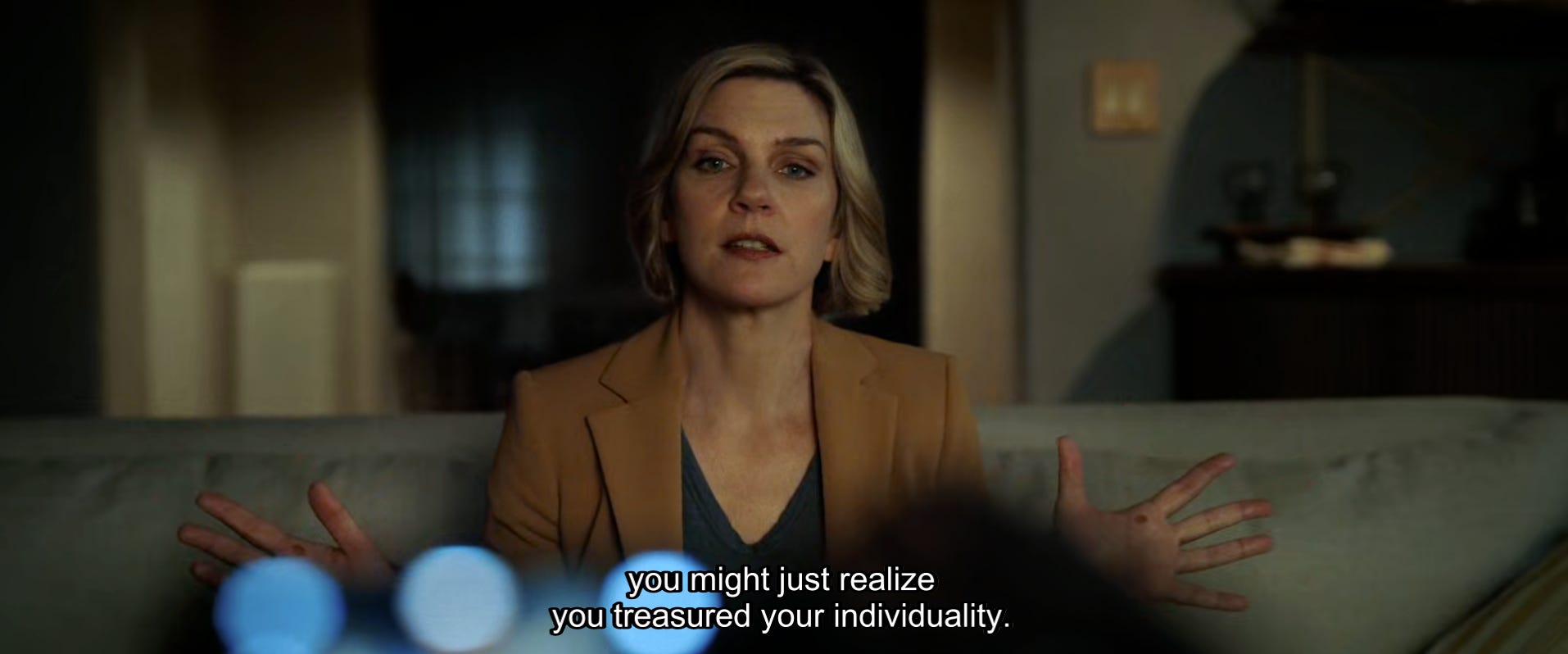
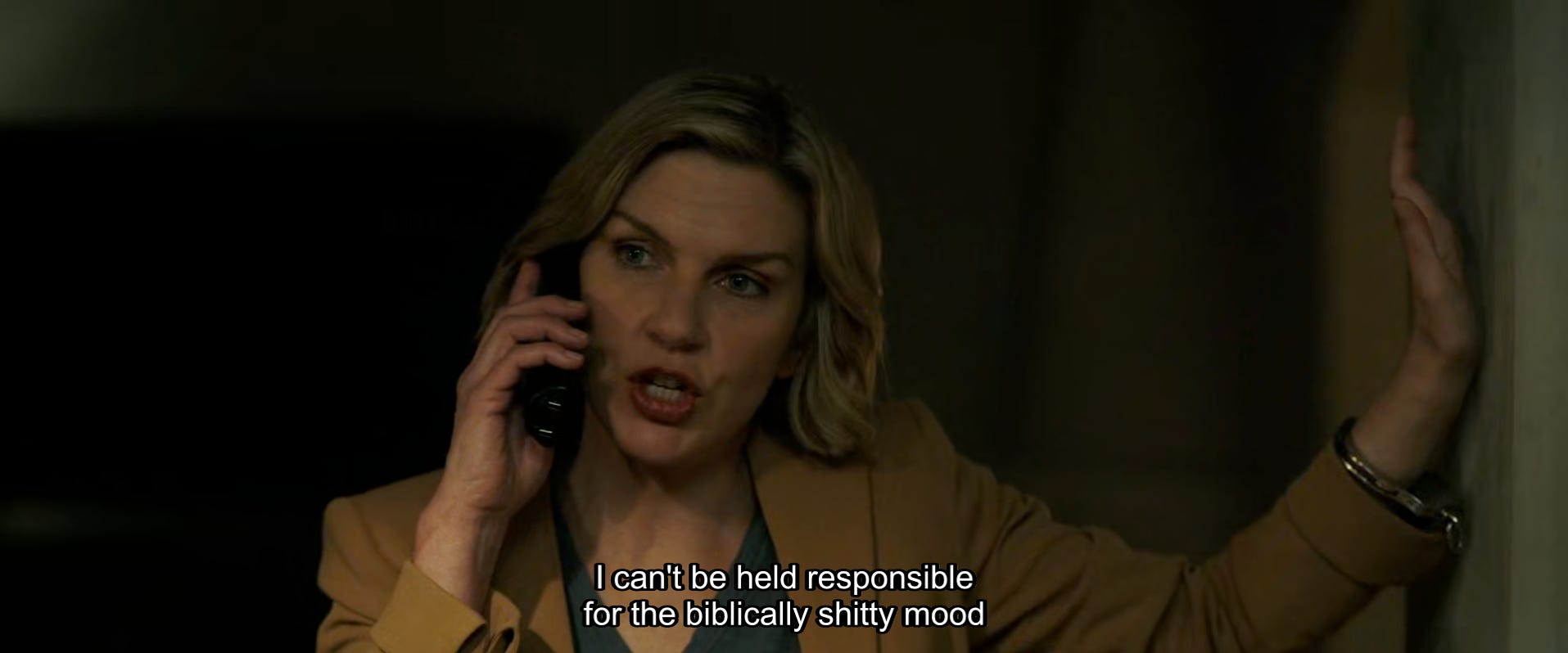
Carol sleeps in her bed instead of on a couch or floor, possibly for the first time since Helen died eight days ago.
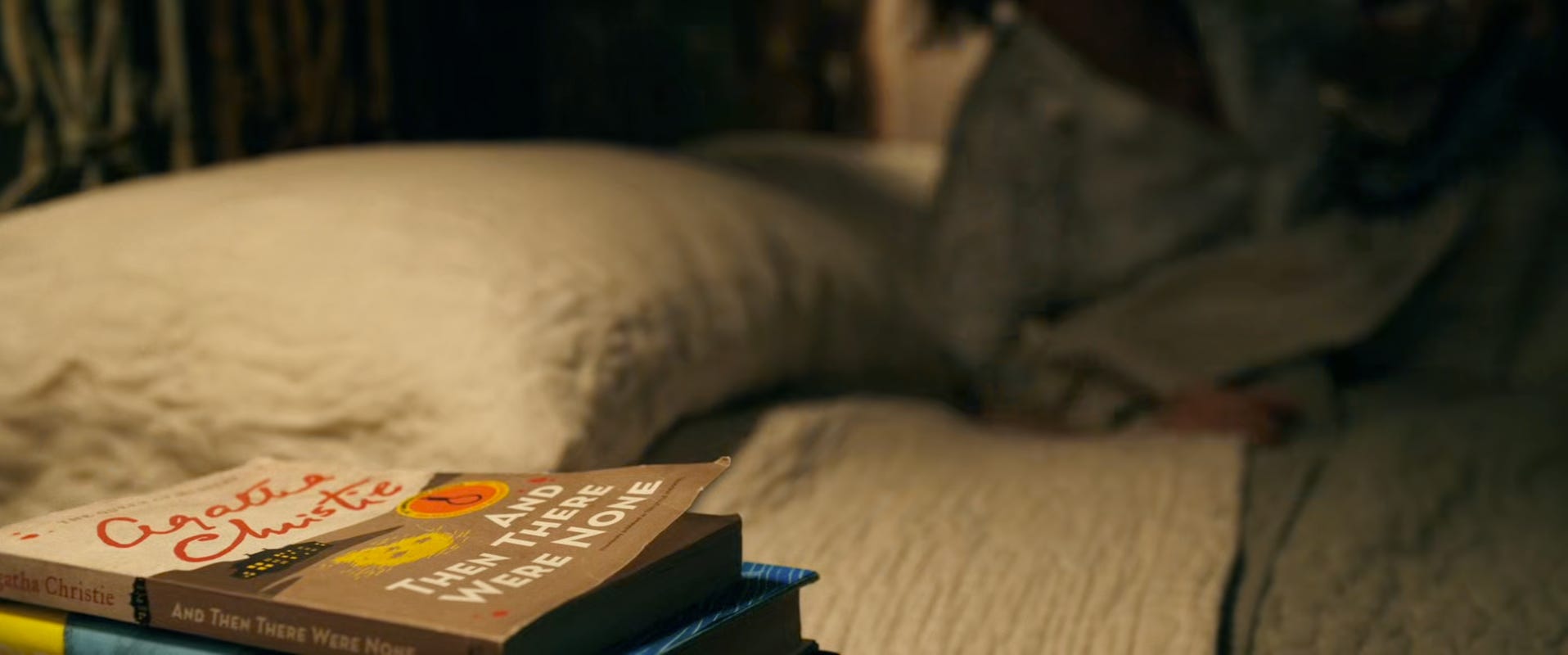
Helen was reading the Agatha Christie novel And Then There Were None.2 There’s some obvious parallel to the fact that Albuquerque has emptied out—and then there were none. And then there might be some parallels with the story as well. We won’t spoil the novel, but We’ll notice how it features 10 strangers brought together because they all have something in common—what, they don’t know, and that’s the mystery.
What do all our survivors have in common? We can bet that episode one has already told us and but we can’t yet see.
This nightstand drop also gives us some insight into the kind of fiction Helen preferred.
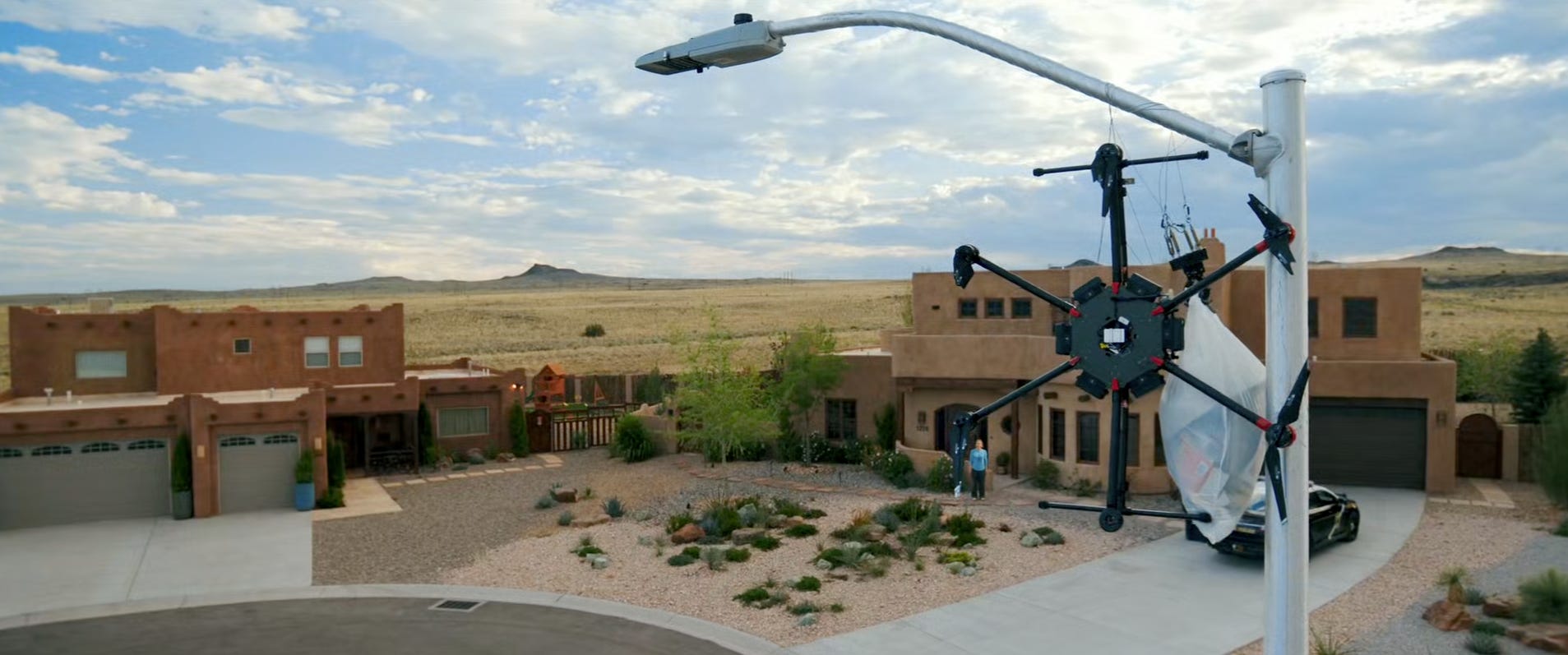
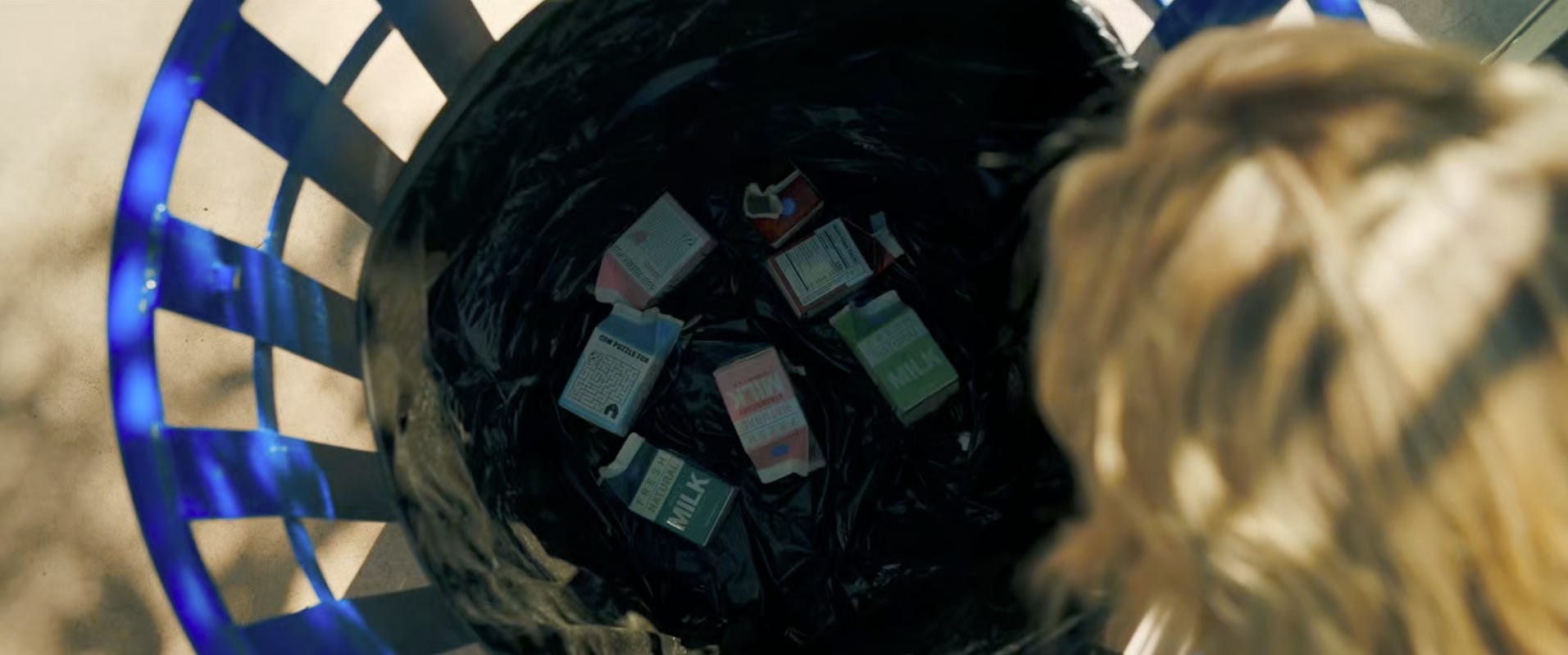
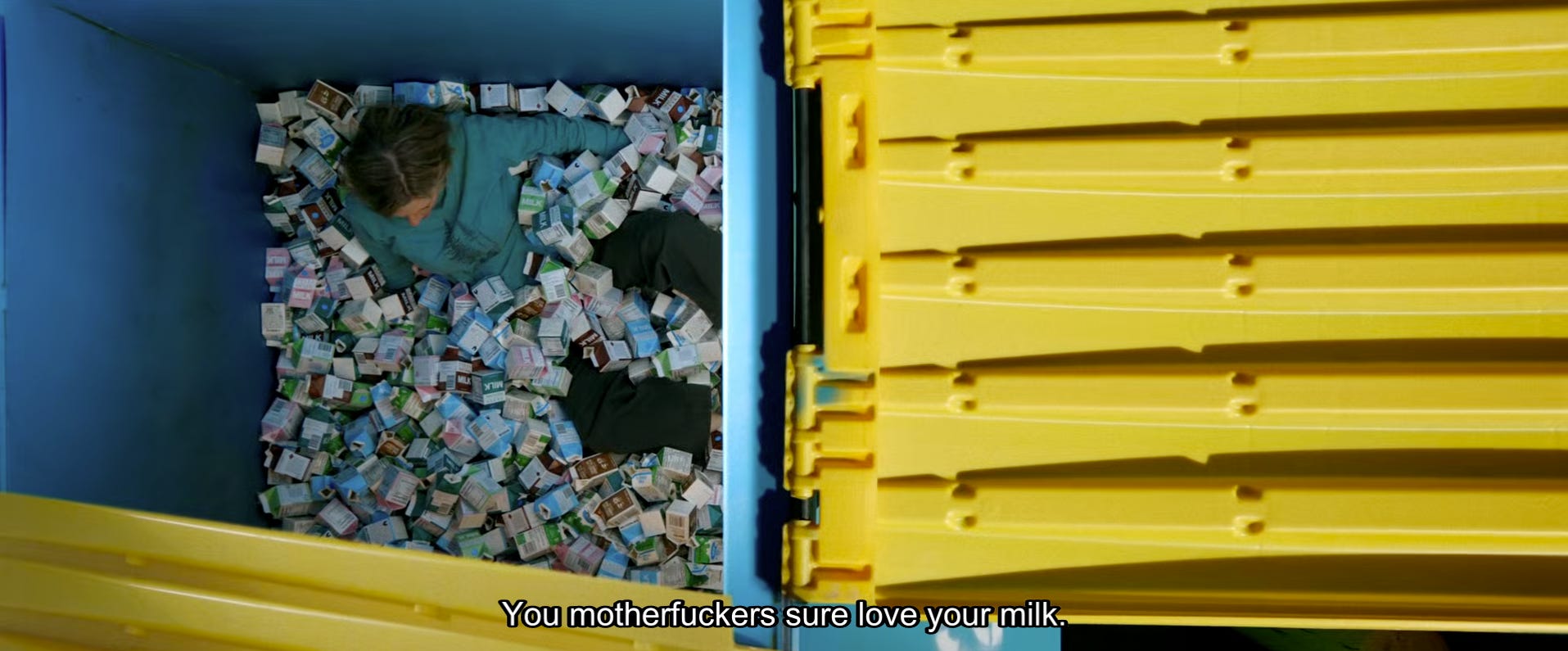
A little more than halfway through the episode we’re into the real mystery. What is in the milk cartons? Why are the Others drinking it? Are the Apostles’ family Others also drinking the “milk?” We saw family Others eating food in Episode 2, and we saw Laxmi’s son Ravi eating ice cream earlier in Episode 5.
Carol pieces together the mystery of the “milk.” It has no smell. It is the texture of olive oil. It has a pH of 7.1, aka neutral.
A new drone arrives to retrieve the second video. The show makes sure we see the crashed drone. Why does the show remind us it’s there…?
The coyotes return to dig up Helen’s grave. We were promised mauling, but We want tigers, not mere coyotes.
Does Carol know she’s on a Hero’s Journey? Does she know she’s unlocked Chekhov’s police shotgun?
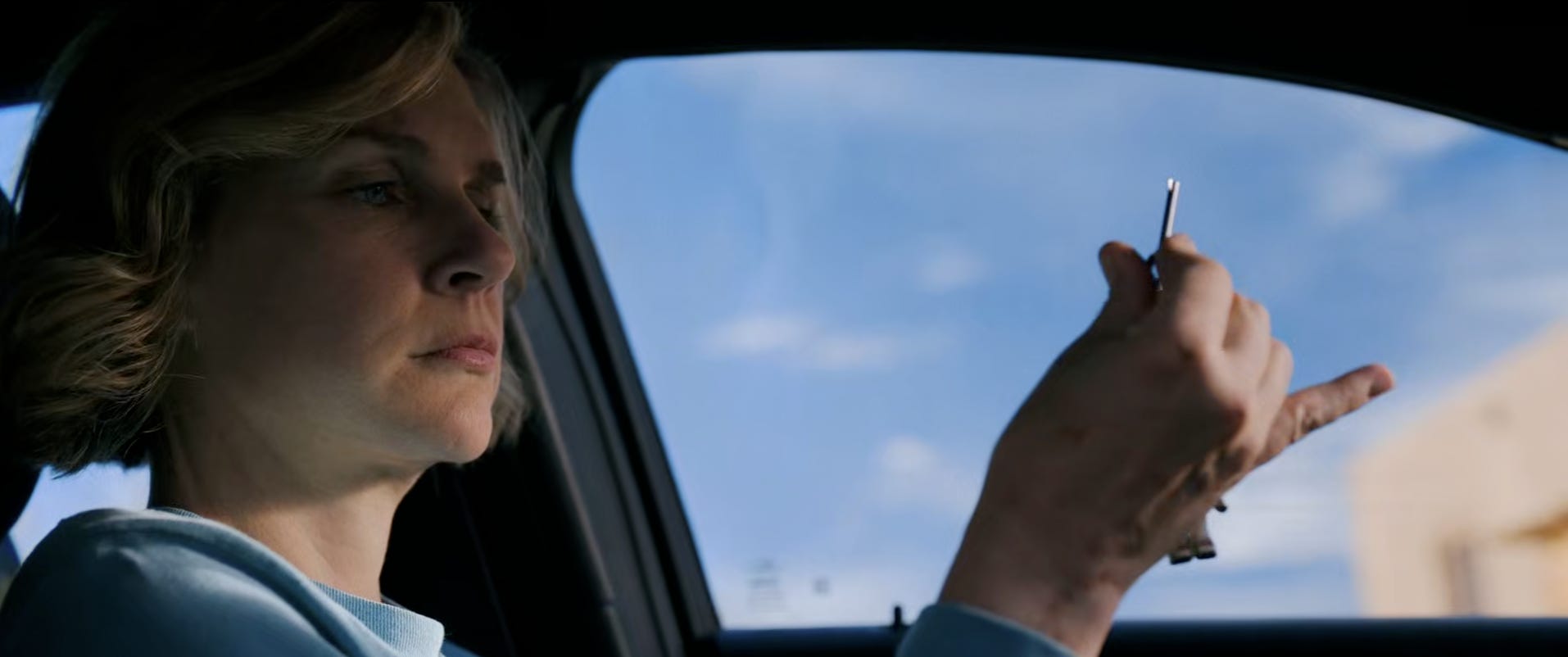
This episode, and perhaps the whole series, is a masterclass in apparent causality. Every action leads directly to a new action. Each discovery affords a new discovery.
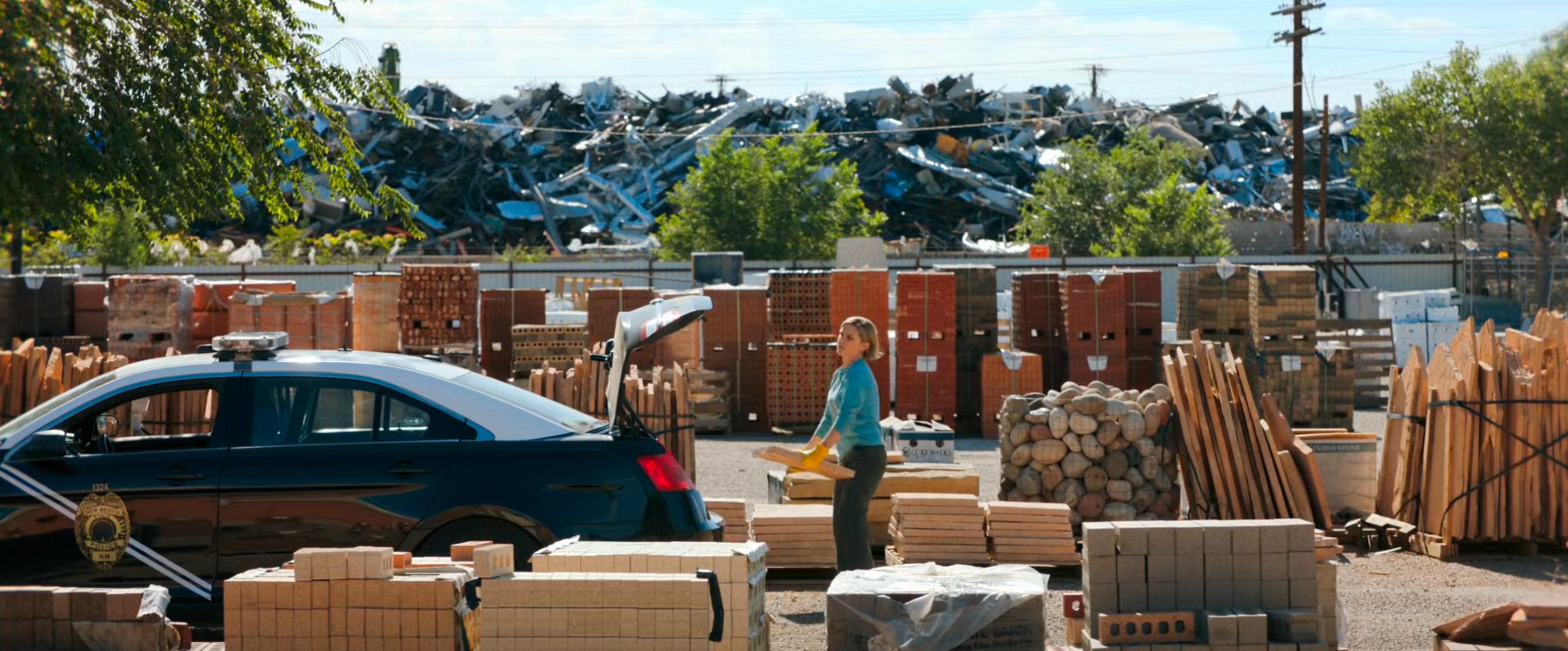
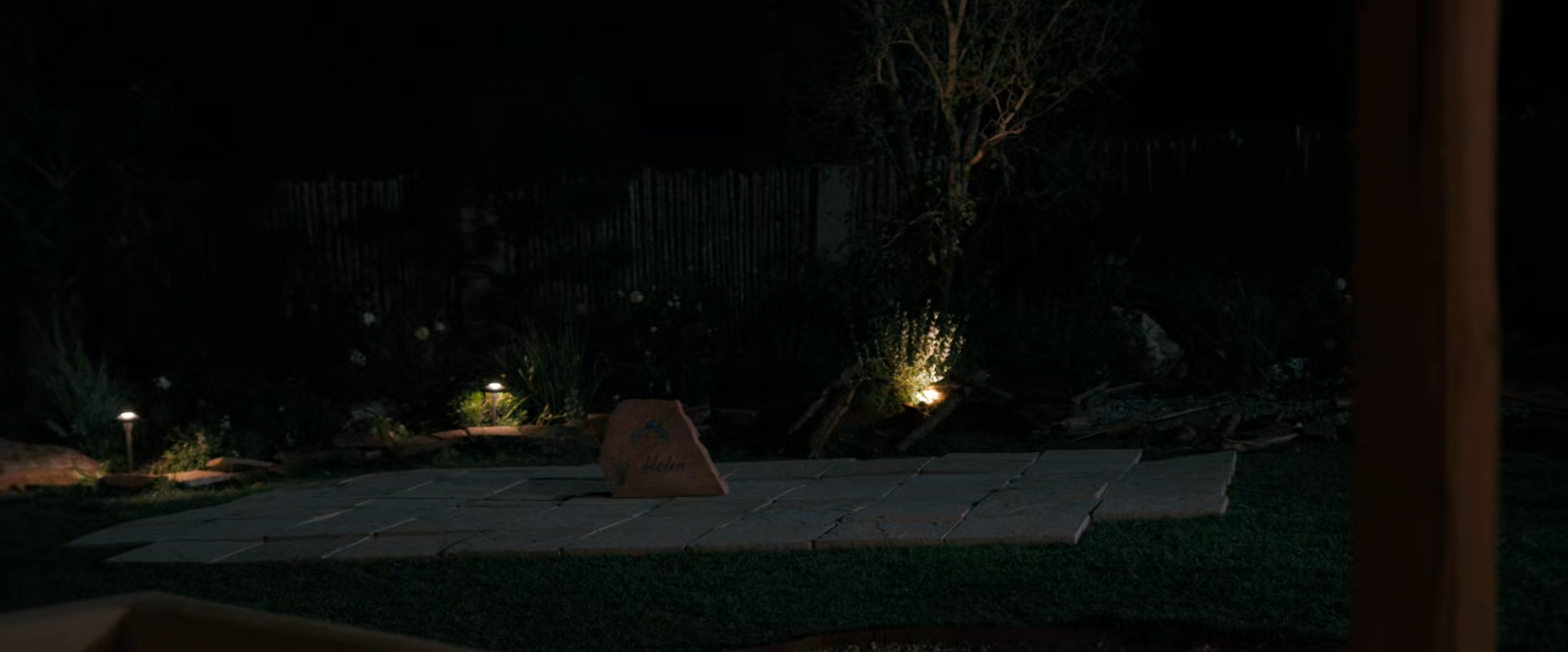
So We wonder what to make of the sequence where Carol covers Helen’s grave in pavers. We have this beautiful shot of the building supply lot with, presumably, collected trash from the disaster 12 days ago. Thematically this sequence piles on Carol’s loneliness. What does it do narratively? Is there something specific we need to know related to building supplies? We feel like We’re missing something here.
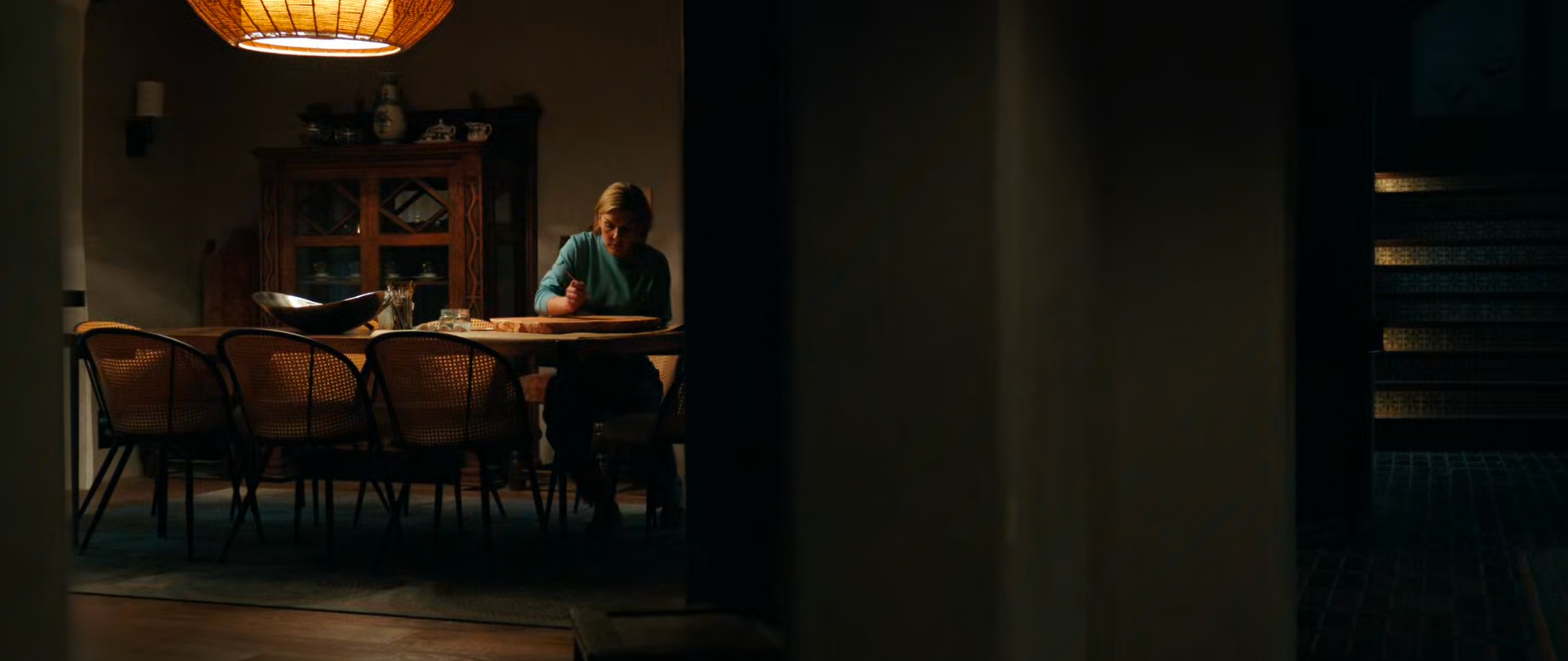
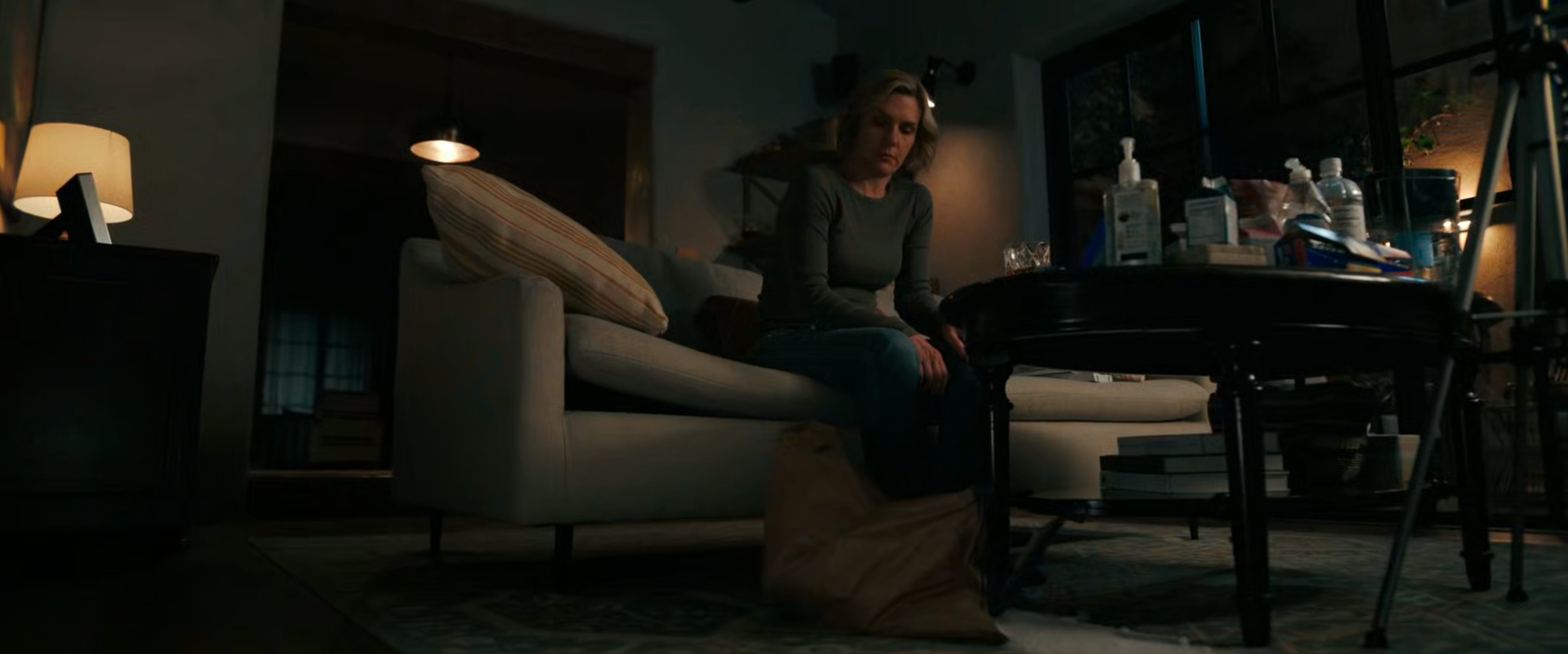
The milk powder spills onto Carol’s carpet, which sets off her quest to find the source. She leads us back to Sprouts—still perfectly stocked—by drones?—and eventually to a food storage warehouse and a great gasp.
Lingering Questions:
Why hasn’t Carol asked (anyone at all) about God?
Why hasn’t Carol asked about other life in the universe?
What was Laxmi’s life like before?
Will Carol ever be happy?
What is happiness?
What did you think about “Got Milk?” What did We miss? Let us know!
George Clooney is a lynchpin actor, not unlike Kevin Bacon.
First published in 1939 under a significantly more racist title.