

PLUR1BUS Explained (part 6)
Breakdown of S01E06, "HDP"

Welcome to part 6 of a nine-part episode breakdown of the Apple TV series Plur1bus (pronounced “pluribus”). This post is spoiler-heavy. If you haven’t already and want to, go watch the show now and then meet Us back here. If you’ve been enjoying this series, please let Us know by tapping the Like button. It means a lot to know that you’re out there, somewhere.
Find previous installments here:
Episode 6 puts Us well beyond the halfway point. We have most pieces on the board now, and we can see how they move towards a climax. We have one big new data point to consider:
It turns out that Soylent Green is made out of people. Which is to say that the Others’ primary source of food is HDP: Human-Derived Protein. The are eating the remains of the 800 million people who died on Joining Day. Carol is shocked. We are not.
( I must say that I—the individual known as Michael Sharick—did not see this coming. I actively dismissed predictions of the kind. I thought, “no way this brilliant show recycles that old trope…” It does and it doesn’t. )
It’s all “troubling,” and we’ll surely learn more in later episodes (probably not this season—plot threads introduced after the midpoint are rarely resolved in Season 1…1). But this week We need to talk about Mr. Diabaté.
We first met Koumba Diabaté in Episode 2 when he arrived in Spain on Air Force One. We know he is from Mauritania and that he seems to prefer the world as it is post-Joining. Episode 6 opens with what looks like a loud casino party and but is actually Diabaté living out the most elaborate James Bond cosplay ever conceived. There are dozens if not hundreds of Others people at this party and they are acting out their roles even when Diabaté couldn’t possibly hear or see them. It’s as if the NPCs in a computer game always acting even when you’re not playing their scene.
The gambling scene looks straight out of Thunderball (1965), Sean Connery’s fourth James Bond movie, but on closer inspection appears to be an aggregate of casino scenes from several films. Diabaté is Bond (just after the title card we see the green-dress waitress shake his martini—no stirring). He plays poker against a few odd characters, including apparently Jeffrey Lebowski, and a stereotypical bond villain who wears an eyepatch like Largo from Thunderball but has hair. The actor, François Guétary, is listed in the credits as “Blofinger,” an amalgam of Blofeld (the heavy in several bond films) and Goldfinger (played famously (famously played…?) by Gert Fröbe).
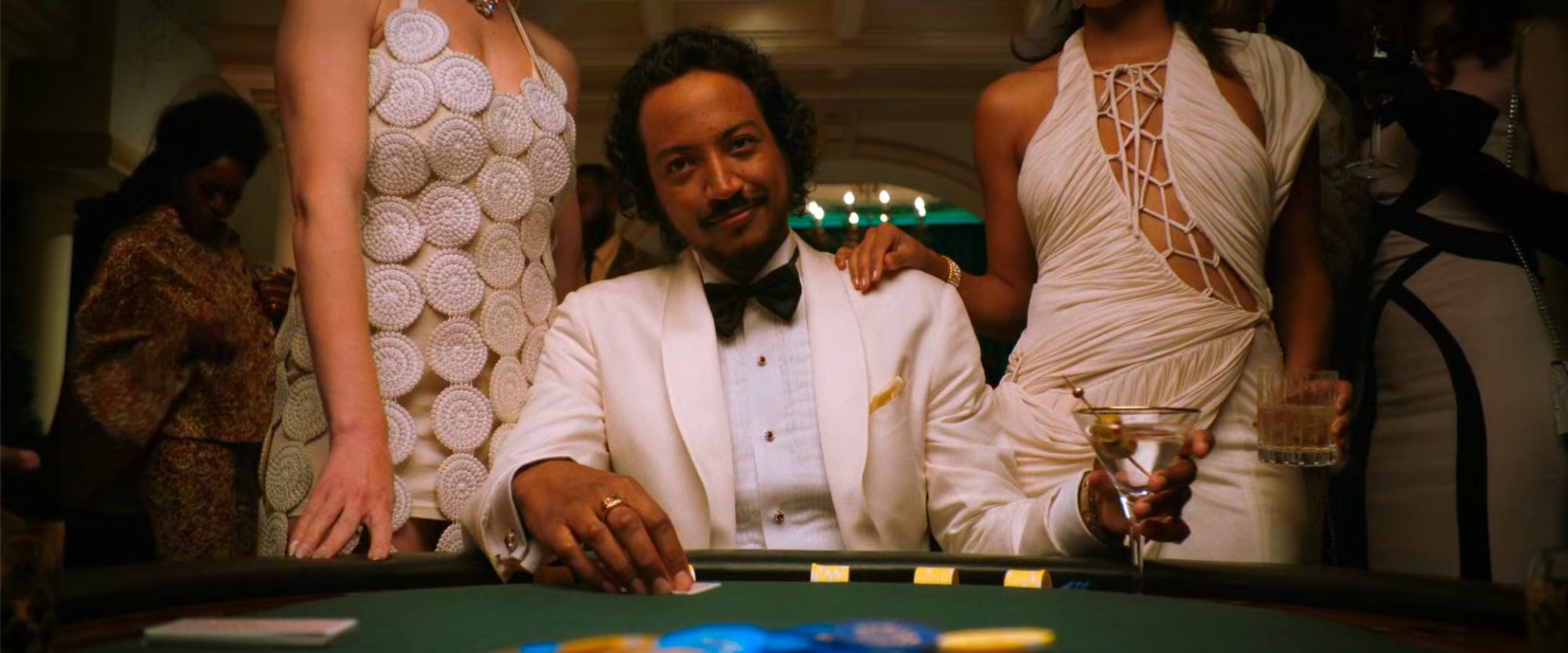
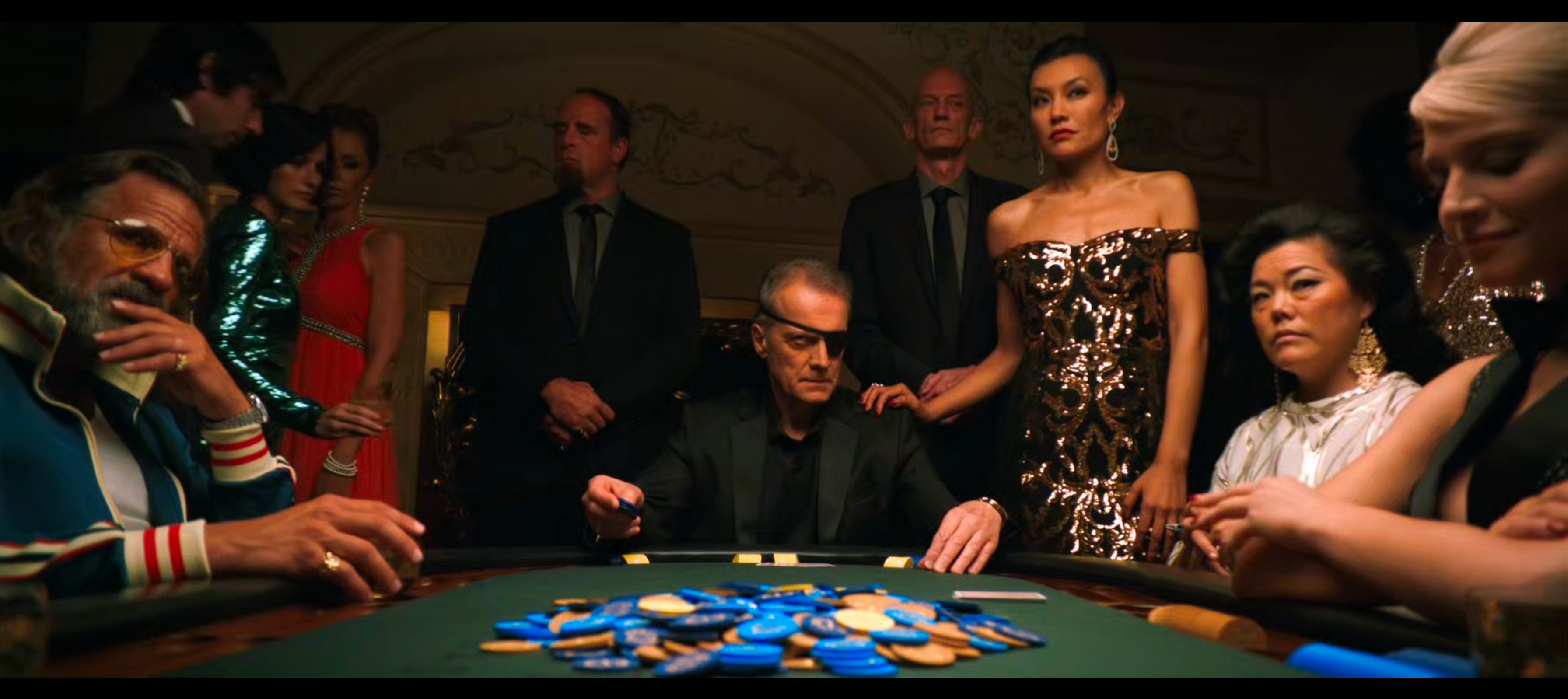
Diabaté wins the poker hand, and all the women at the table. Once he has left the casino, all the Others—including Blofinger and his henchemen—stop acting and clean up the scene. It’s like the holodeck on Star Trek, and but the holographic characters have to put away all the toys after the game.
Is winning this poker game—obviously rigged by the Others—fun for Diabaté? In a 1988 Star Trek episode called “Elementary, Dear Data,” Data (an android) and Chief Engineer Geordi LaForge visit the holodeck (virtual reality play space for grownups) as Sherlock Holmes and Dr. Watson. They play through an amalgamated Sherlock Holmes-style mystery, but since it was compiled using Arthur Conan Doyle’s original works, Data solves the whole game—which is supposed to take hours—in a few seconds. LaForge gives up and hits the bar where he vents to Dr. Pulaski, an AI skeptic who doesn’t think much of Data. Here’s the scene:
LAFORGE: Data, what was the point in going to the holodeck?
DATA: To solve a Sherlock Holmes mystery.
LAFORGE: Exactly, but, you’ve got them all memorized. The first time someone opens their mouth, you’ve got it solved, so there’s really no mystery. If there’s no mystery, there’s no game. No game, no fun. I’m not upset with you, Data, really. It’s just that we go through all the trouble to arrange the time to go down to the holodeck, to get the proper wardrobe, to get into character, and then boom, before we even get started you jump to the end. You see, I was looking forward to the mystery.
DATA: Then I should have extended the sequence of events.
LAFORGE: Oh, I’m not getting through. The fun in the program, Data, was in the attempt to solve a mystery.
DATA: Is that not exactly what we were doing.
PULASKI: You are wasting your breath, Lieutenant. Saying that to Data is asking a computer not to compute.
DATA: Am I so different from you, Doctor? Are you able to cease thinking on command?
PULASKI: In medicine I’m often faced with puzzles that I do not know the answer to.
LAFORGE: She’s right, Data. You always know the answer.
PULASKI: To feel the thrill of victory there has to be the possibility of failure. Where’s the victory winning a battle you can’t possibly lose?
DATA: Are you suggesting that there is some value in losing?
PULASKI: Yes. Yes, that’s the great teacher. We humans learn more often from a failure or a mistake than we do from an easy success. But not you. You learn by rote. To you all is memorization and recitation.
LAFORGE: I don’t know about that. Deductive reasoning is one of Data’s strengths.
PULASKI: Yes, and Holmes too. But Holmes understood the human soul. The dark flecks that drive us, that turn the innocent into the evil. That understanding is beyond Data. It comes from life experience which he doesn’t have combined with human intuition for which he cannot be programmed.
LAFORGE: Now you’re just being unfair, Doctor.
PULASKI: I don’t think so, Lieutenant. Your artificial friend doesn’t have a prayer of solving a Holmes mystery that he hasn’t read.
DATA: I have read them all.
PULASKI: You see?
LAFORGE: Maybe the computer could create one in the Holmes style. One where you wouldn’t know the outcome.
PULASKI: As I said, he wouldn’t have a prayer.
DATA: I accept your challenge, Doctor.
LAFORGE: Good for you, Data.
DATA: We will return to the holodeck, where I will dare it to defeat me. And you, Madam, are invited to be a witness.
PULASKI: I wouldn’t miss it.
DATA: Come, Watson.
Could the others create a Bond-like poker game for Diabaté that contained the possibility of failure? Would they? Would they tolerate the idea that he might become unhappy?
On an even more slightly unrelated note, is anyone out there using AI to create games? Does it work? Is it fun? Let Us know:

In the hot tub, one woman poses like Brigitte Bardot in Le Mépris (Jean-Luc Godard, 1963). This pose is for us, right? For the viewers? Diabaté can’t see her from his angle in the hot tub, so this can only be for us, just like Bardot’s body on display.

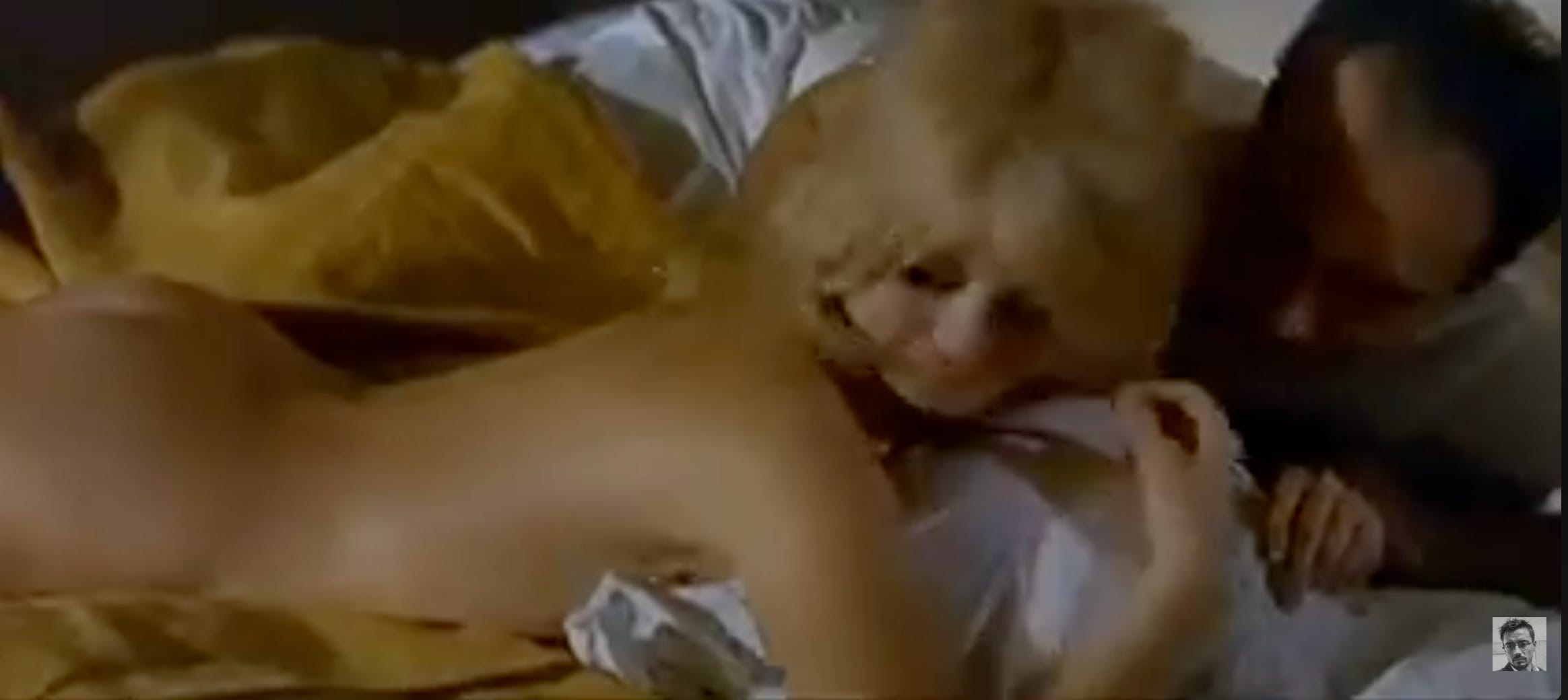
The hot tub Others freeze for a moment2 and then begin to clear out before Carol arrives. They suggest that Diabaté might accompany them away from Carol. He refuses. “I can’t do that to her. Sooner or later we’ll have to talk.” Why can’t he “do that” to her? How can we explain the obligation he seems to feel?
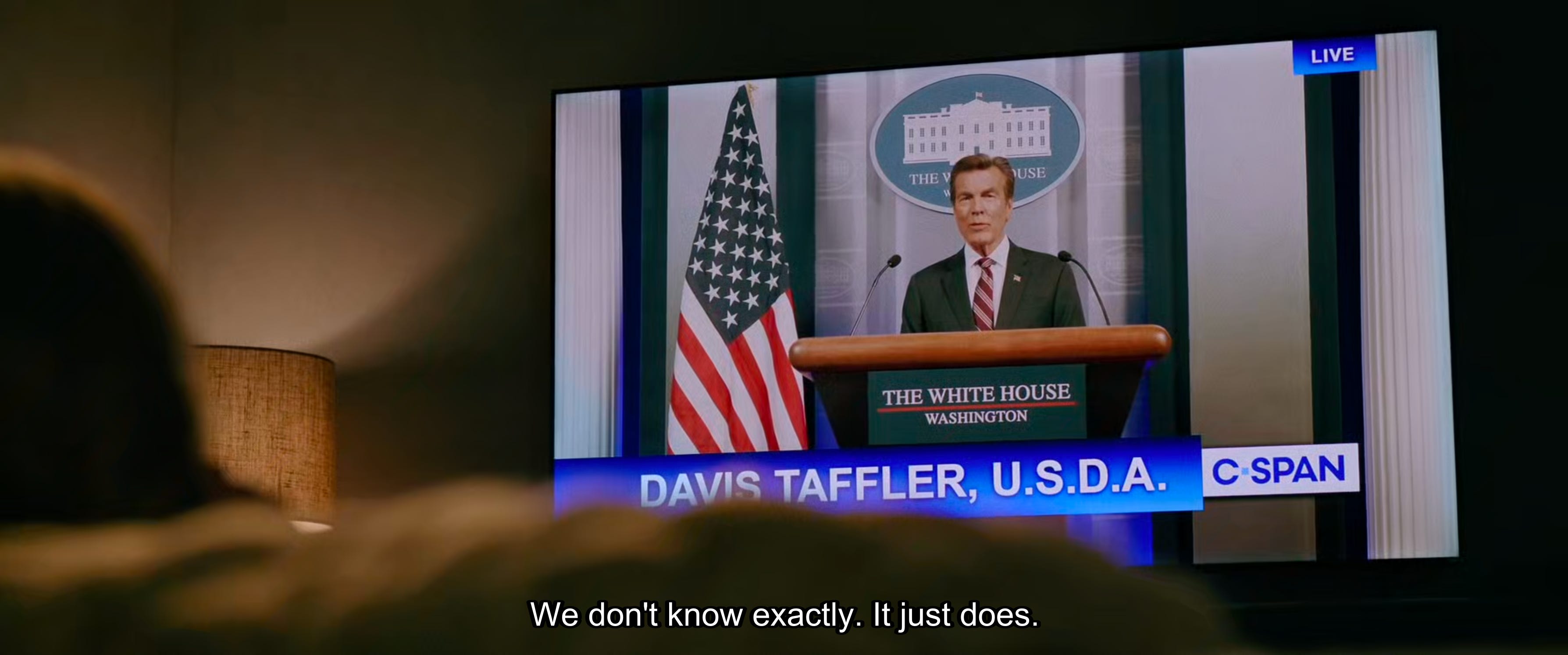
By the way—it’s an eight-hour drive from Albuquerque to Las Vegas. Does she stop for gas? Are the pumps along the way operational? From now on, every time We encounter a how-does-that-work question, we’ll just remember Davis Taffler’s line3 from Episode 1:
Carol thinks she’s going to shock Diabaté with her Soylent Green video, but he already knows. “It is troubling,” he says. But the Others have provided a video of their own staring John Cena to explain.
Carol asks,
“about the fact that in Spain they all said they were vegetarians!”
Diabaté: “Ah. I asked Jon Cena about that. He reminded me that technically what they said was that they prefer to be vegetarians.”
Carol: “Oh great, so all the fucking lawyers in the world survived.”
This is treated like a throwaway detail, but it is important, because it’s how the Others deceive without lying.
We learn Diabaté maintains regular contact with the other Originals (excluding Manousos…).
He speaks on the phone with someone, talking about Carol. “But she’s so lonely…. Yes, I know…. Okay… I miss you too, my loves. See you soon.”
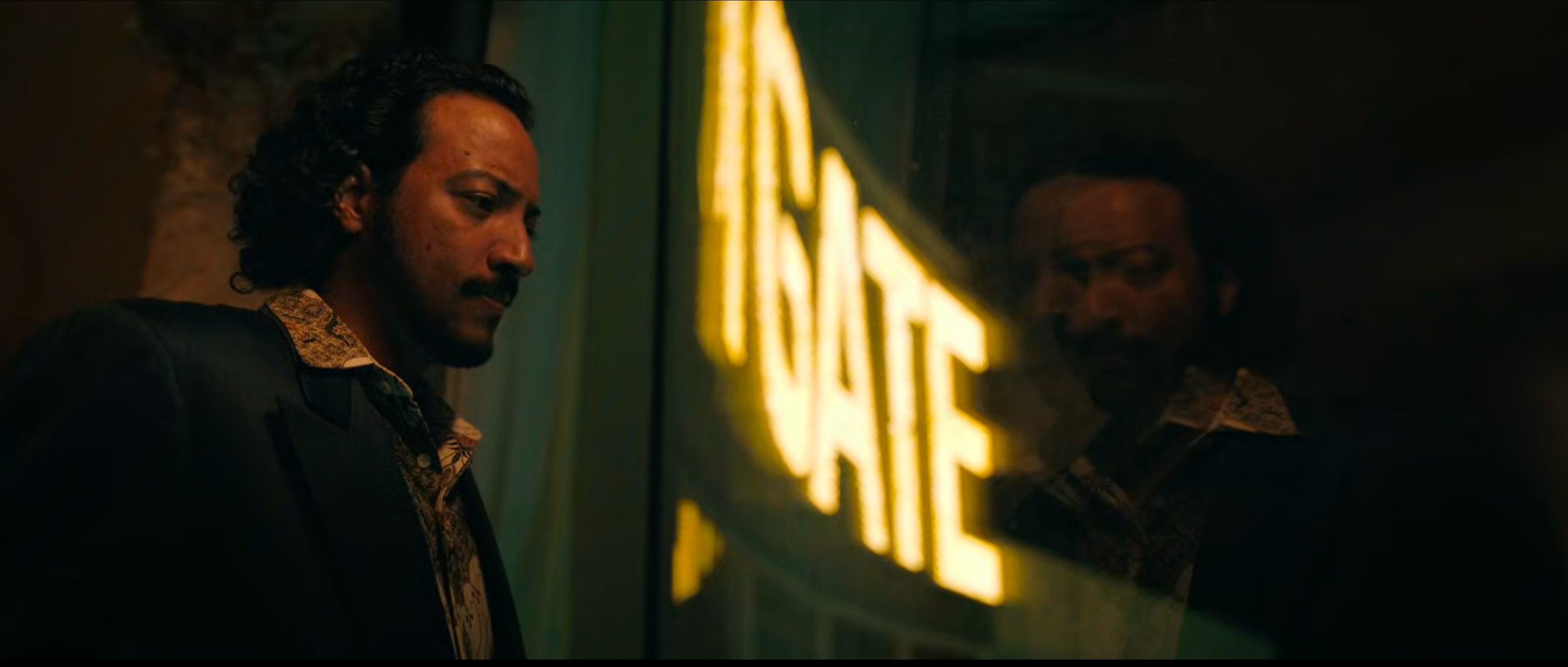
Any time we see a character looking in the mirror—especially a window at night (the original black mirror)—they’re having a self-reflective moment. A literal reflection is always a visual correlative for a metaphorical reflection.
No clock in this episode…?
Speaking of clocks, Episode 6 spends an entire minute of screen time to make sure we see Carol spread avocado on her toast and make an open-face breakfast sandwich. Notice the way Diabaté watches her. First he observes what she’s doing. His entire expression changes. What the heck? he seems to say. Wow… He takes a piece of toast, then haphazardly spreads avocado, copying Carol, glancing at her to check his work. He makes the exact same breakfast sandwich. Then he watches her take a gigantic bite. He takes his own huge bite.
“Hmm!,” he says. To me, this sounds like the “hmm” of a person tasting something for the first time. Maybe they don’t have avocado toast in Mauritania? Or maybe something else?
Why use 60 precious seconds of screen time for toast? Friends, comrades, this is not nothing.

“There is a way to reverse this,” Carol implores. “Help me find it. Do you seriously think the world is a better place now just because it’s peaceful?”
Here, Carol references Diabate’s argument in Episode 2. Let’s revisit Diabaté’s scenes from Episode 2:
The first thing to remember is that, like Carol, Diabaté doesn’t travel with any Joined family members—We almost don’t notice this detail because of the flair with which he arrives. Unlike Carol, he has embraced the company of Others.
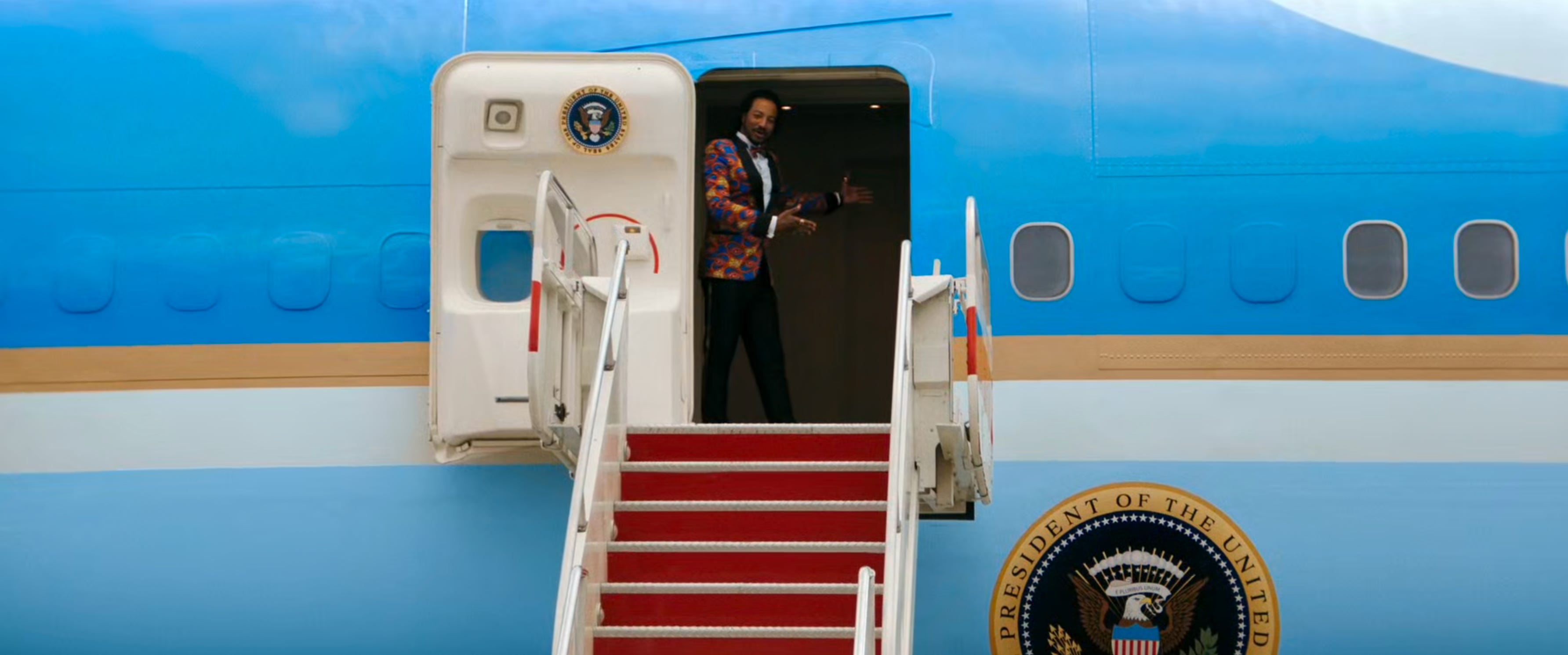
“I am Koumba Diabaté.” Let’s unpack that name. “Koumba” is traditionally a girls’ name. “Diabaté” is a common West African name that means “irresistible.” What shall we make of these facts, these deliberate choices?
He shows off the “nuclear football”—the briefcase containing authorization to use nuclear weapons. It travels with the President of the United States, who, Davis Taffler reminds us, died on Joining Night. Diabaté jokes that he doesn’t think the football works anymore, but “don’t drop it!” Is this Chekhov’s nuclear football??
Carol insists that “it’s up to us to put the world right.” Diabaté replies, “why? Why does the world need saving? At present the situation seems very nice.”
Carol presses. “I’ve seen this movie, and it does not end well.”
Diabaté: “I am not convinced that things are as bad as you say. As we speak, no one is being robbed or murdered. No one is in prison. The color of one’s skin, by all accounts, now meaningless. All zoos are empty. All dogs are off their chains. Peace on earth.”
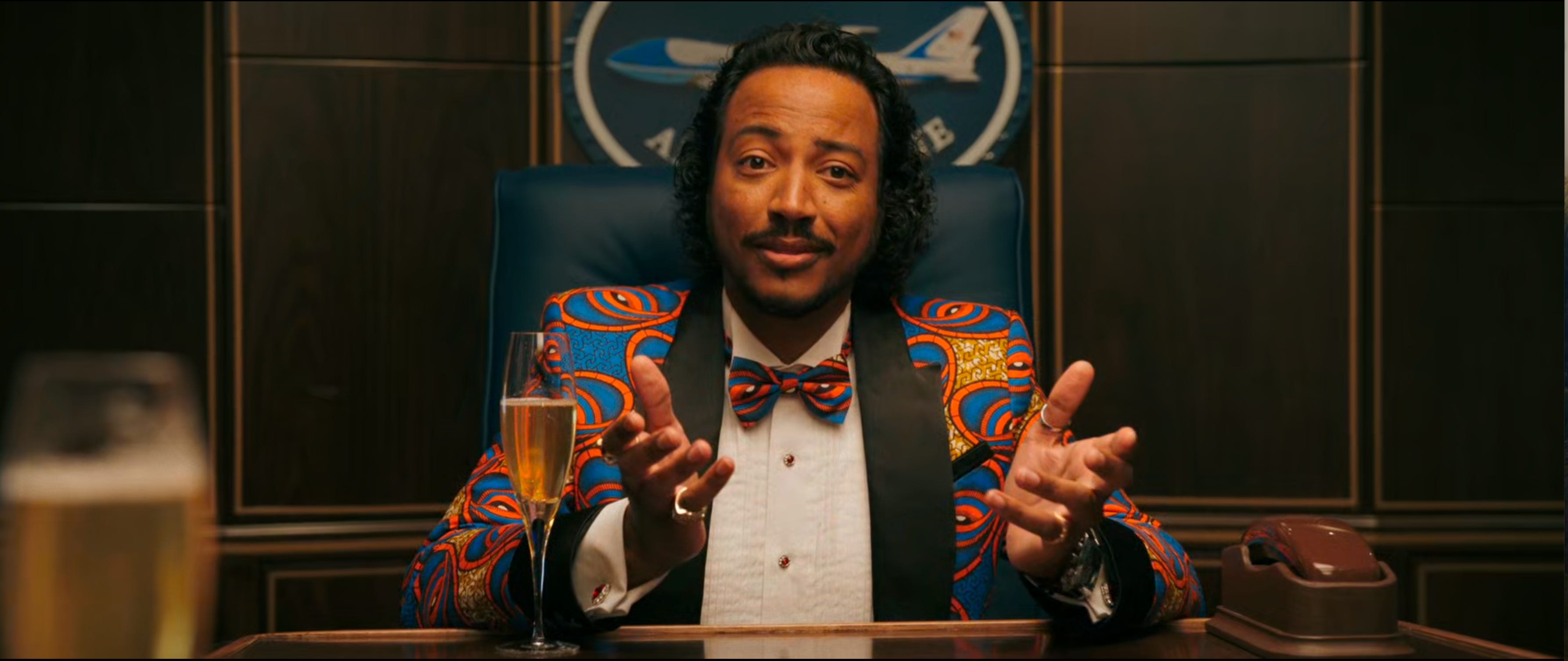
Why would he mention prison?
The conversation continues over lunch. Diabaté is rather excited to eat poulet yassa, like his aunt used to make when he was a child. This is where the Others speak in circles about killing.
“Our Joining is very much the antithesis of slavery,” says Zosia.
After Carol gets drunk and angry and blacks out, Diabaté is the only Original who stays in Spain to speak with her. He informs her of his plans to stay at the Elvis Presley suite in the Westgate Hotel in Las Vegas, Nevada—notice how, when we were in the moment of Episode 2, we didn’t notice this very specific information that ended up being important here in episode 6.
“What is wrong with you?” Carol asks. Good question. Something isn’t right.
“Zosia, have I shown you affection that is unwelcome?”
“For us, affection is always welcome.”
Carol begins to get angry again and Diabaté interrupts: “the last thing these people need is you losing your temper.” Perhaps his interest in her is purely practical. He recognizes how powerful her moods can be. In this scene, he wants Carol’s permission for Zosia to accompany him to Vegas. Carol tells Zosia to make a choice. Zosia insists, “if we were to make a choice, one of you would be hurt. We can’t do that.”
“Perhaps I’ve not seen the movies you spoke of,” Diabaté says. “But to me, this does not seem like the end of the world.”
Diabaté has seen movies. James Bond. Godard. Elvis. His frame of reference is the 1960s. And John Cena…?
Back in the now of Episode 6, Diabaté has learned that the Others “cannot turn us. Not without our consent. It seems the only way to make the virus work on us is by tailoring it to our individual stem cells. But to obtain those stem cells they must first collect them from our bodies. What? Apparently that involves sticking a large needle into the bone of the hip. Somewhat painful and very invasive. Something they cannot do without our permission.”
Diabaté does not want to be turned, and he doesn’t want things to go back to the way they were.
( Pluribus belongs in a special category of happy-to-be-the-lone-survivor fiction, along with the famous Twilight Zone episode, “Time Enough at Last” (written by Rod Serling based on a story by Lynn Venable, directed by John Brahm, aired in November 1959). You know—the one with Burgess Meredith, he loves to read, coke-bottle glasses…? )
“They asked me if I would give my consent. I said, ‘regrettably, as of this time, I prefer not to.’”
Here Diabaté channels Bartleby the Scrivener.
Refusal is a defining human characteristic.
Notice how uncomfortable Diabaté acts upon discovery of Carol’s police vehicle…
At last the clock appears. It’s been twelve days. That doesn’t seem like enough time to have established a routine of regular check ins between the survivors. Another element that sets Plur1bus apart from more traditional zombie post apocalypse texts is that we get to see the days after zero hour. Romero’s Living Dead movies are about the zero hour itself. The Walking Dead and The Last of Us take place years later.
The rest of episode 6 is devoted to Manousos. We learn that he has/had a troubled relationship with his mother, and that he’s on his way to find Carol, seemingly by driving from Paraguay to Albuquerque.

We’ll treat Manousos heavily in the next post.
Theory One: Diabaté was in prison. Now he’s living the best life he never could have expected.
Theory Two: Religion was a big part of Diabaté’s life. When the Joining happened, his entire system of belief was upended. He speaks French and indulges in Western fantasies—gambling, sex, alcohol—so we see him as European. But he is from Mauritania—officially the Islamic Republic of Mauritania—a highly religious nation where more than two percent of the population is legally enslaved. Perhaps Diabaté was a slave.
One thing’s for sure: life is better for him now, and he has a host of reasons not to go back.
What do you think? What did We miss this time?
Episode Credits:
Directed by Gandja Monterio
Written by Vera Blasi
Produced by Jenn Carroll, Jeff Frost, Vince Gilligan, Julie Hartley, Diane Mercer, Andrew Ortner, Allyce Ozarski, Trina E. Siopy, Chris Smirnoff, Gordon Smith, Alison Tatlock
Photographed by Marshall Adams
This individual is not totally certain of the big narrative question being asked, but We’re guessing that Episode 9 will end with Carol and a moment of pure delight.
As if receiving instructions? From where? Is there a center to the hive mind? This individual sort of hopes there is no queen or hub, that each individual Other is like one neuron in a brain…
Also, we should probably keep an eye on many of Taffler’s lines, including “That individual [the president] passed away this evening, along with quite a few senior members of the United States Government…”
The avocado toast moment stopped me, too! The show really seems to operate on the "trust the viewer" kind of mentality, and I'm always surprised by how much it relies on our patience (especially with hearing Carol's voice recording 12 times haha). It's joining other Apple shows like Severance and Silo that operate on a really slow burn for a long time...which I think is going to lead to a killer finale.
Agreed, slow burn, trust the viewer. And yes, killer finale—I feel like we’ve been promised a mauling.
And but if it’s like Severance and Silo, then we won’t get answers to narrative questions posed after episode two.
Silo asks, “what’s outside?”
Severance asks, literally, “who are you?” of Helly (I love Severance so much…).
I’m not sure I know what Pluribus’s big narrative question is…
Thoughts?